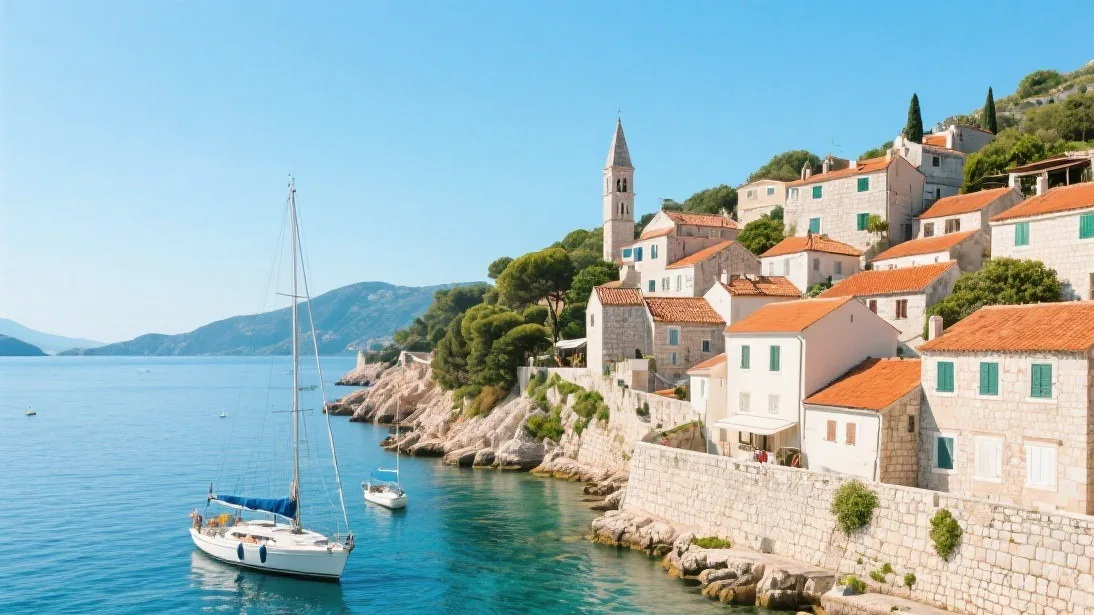
During my last visit, I spent three hours wandering through the narrow streets, completely lost and completely happy.
I bought my first serious camera, a Fujifilm X-T20, two weeks before a solo trip to Portugal. I had no idea what I was doing with the settings, but I knew that traveling alone meant I would have the patience to wait for the right light, the right moment, and the right composition in a way that group travel never allows. That trip produced some of my favorite photographs, and over the next three years of solo travel, photography became the thread that tied all my Trip together. This guide covers the specific techniques, gear choices, and locations that have worked best for me as a solo traveler with a camera.
"You don't take a photograph, you make it." — Ansel Adams
Choosing Gear for Solo Travel Photography
I've found that The biggest mistake I made early on was bringing too much gear. On my first solo photography trip, I lugged a full-frame DSLR, three lenses, a tripod, and a laptop through Lisbon for ten days. My shoulders ached constantly, and I left the tripod in my hotel room half the time because it was too heavy to carry on the tram. For solo travel, less gear means more freedom, and more freedom means more photographs. My current setup is a Fujifilm X-T5 with a single 23mm f/2 lens, which gives me a 35mm equivalent field of view. That one combination handles 90 percent of the situations I encounter while traveling alone.
I've learned that If you want more versatility without the weight, a mirrorless camera with a 24-70mm equivalent zoom lens covers everything from wide street scenes to tight portraits. Sony's a6700 with the 16-55mm f/2.8 lens is a popular combination that weighs under two pounds. For phone photographers, the iPhone 15 Pro or Google Pixel 8 Pro are genuinely capable cameras, and the advantage of shooting with a phone is that you always have it with you. Some of my most-shared travel photos were taken on my phone during moments when my camera was zipped in my bag.
A tripod is worth bringing, but only a small one. I carry a Peak Design Travel Tripod, which folds down to 15 inches and weighs under three pounds. It fits in my daypack alongside my camera and a water bottle. For solo self-portraits, a lightweight tripod is essential, and I also use it for long exposures at blue hour, which is that 20-minute window after sunset when the sky turns deep blue and city lights begin to glow. A small remote shutter release, which costs about 10 dollars, lets you trigger the camera without touching it, eliminating shake and letting you step into the frame for self-portraits.
Shooting Street Scenes Without a Companion
The hardest part of solo street photography is not technical, it is psychological. Standing on a street corner with a camera, alone, watching strangers, feels awkward at first. I spent my first few days in Marrakech barely raising my camera because I was worried about how people would react. The breakthrough came when I realized that most people either do not notice or do not care. The trick is to shoot from a position of confidence. Walk slowly, keep your camera at chest level rather than hiding it, and when you make eye contact with someone, smile and nod. In my experience, a smile defuses tension 90 percent of the time.
In cities where photography is more sensitive, like the markets of Old Delhi or the residential neighborhoods of Kyoto, I ask permission before shooting close-up portraits. Learning to say "May I take your photo?" in the local language, even badly, makes an enormous difference. In Hindi, it is "Kya main aapki tasveer kheench sakta hoon?" In Japanese, "Shashin totte mo ii desu ka?" Most people say yes, and some even pose enthusiastically. When someone says no, I thank them and move on without pressing. The few portraits I have lost to refusals are nothing compared to the discomfort I would feel if I shot someone against their wishes.
For candid street scenes, I use a technique called the "fishing spot." Instead of chasing subjects through the streets, I find a visually interesting background, a doorway with peeling paint, a patch of light falling across a cobblestone street, a brightly colored wall, and I wait there for 15 to 20 minutes. People walk through my frame naturally, and I shoot when the composition comes together. This approach is less intrusive than following people, produces more natural expressions, and is physically easier because you are standing still rather than walking and shooting at the same time. In Havana, I found a corner near the Capitolio where the afternoon light hit a pastel-yellow wall, and within 20 minutes I had captured a woman carrying groceries, a man on a bicycle, and a child chasing a pigeon, all against that same beautiful backdrop.
Traveler's Tip
Photography Tip: Shoot in RAW format instead of JPEG. RAW files contain far more data, which gives you much more flexibility when editing later. A slightly underexposed RAW file can be recovered beautifully, while the same shot in JPEG may be unsalvageable. The tradeoff is larger file sizes, so bring a memory card with at least 64GB of storage.
Self-Portraits and Solo Scene
One of the challenges of solo travel photography is including yourself in the frame. I use three methods, depending on the situation. The simplest is to hand my camera to a stranger and ask them to take a photo. This works well in tourist areas where people are accustomed to the request. I always frame the shot first, show the person exactly what I want, and check the result before they walk away. About one in ten strangers takes a genuinely good photo, but the success rate improves dramatically if you show them a reference image on your phone screen.
For more control, I use the tripod and remote shutter method. I set up the composition on the tripod, focus on the spot where I will stand, set a 10-second timer, and walk into the frame. This requires some trial and error, but it produces consistent results once you get the hang of it. I use this technique at scenic overlooks, in front of interesting architecture, and at golden hour when the light is too good to waste on asking strangers to operate my camera. The downside is that it is slow, and in crowded places, someone will inevitably walk through your frame between the moment you press the shutter and the moment it fires.
Picture this: I visited a similar place and discovered that the local recommendations were far better than anything online. One shop owner pointed me to a hidden spot that became the highlight of my entire trip.
Think about the time I spent in Vietnam's Mekong Delta. Instead of booking a standard tour, I arranged a homestay through a local contact. The family taught me to harvest rice, catch fish with traditional nets, and cook over an open fire. Those three days cost less than one night in a hotel and provided memories no luxury resort could match.
The third method is the "arm's length selfie" with a wide-angle lens. It is not ideal for Scene, but for environmental portraits in markets, cafes, and street scenes, holding the camera at arm's length with a 23mm or wider lens produces a natural-looking result. The key is to hold the camera slightly to the side rather than directly in front of your face, and to include some of the surrounding environment in the frame. A photo of you holding a coffee cup in a Lisbon cafe, with the tile floor and mirrored wall visible behind you, tells a much richer story than a straight-on selfie ever could.
Like when I visited a similar place and discovered that the local recommendations were far better than anything online. One shop owner pointed me to a hidden spot that became the highlight of my entire trip.
Working with Natural Light on the Road
Golden hour, the first hour after sunrise and the last hour before sunset, is the most overused piece of photography advice, but it is overused because it is true. The quality of light at these times transforms ordinary scenes into something remarkable. In Cusco, Peru, I photographed the Plaza de Armas at sunrise, when the orange light hit the colonial facades and the church spires cast long shadows across the empty square. The same plaza at midday looked flat and unremarkable. The practical challenge for solo travelers is that golden hour requires early mornings and late evenings, which means adjusting your sleep schedule and planning your daily activities around light rather than attractions.
Blue hour is the period I look forward to most when traveling alone. It occurs 20 to 30 minutes after sunset, when the sky turns a deep, saturated blue and artificial lights begin to dominate. This is when cityscapes look their best. In Istanbul, I photographed the Hagia Sophia and Blue Mosque from the Galata Bridge during blue hour, and the combination of the dark blue sky, the warm mosque lights, and the reflections on the Golden Horn produced one of my favorite images from any trip. For blue hour photography, you need a tripod because the shutter speeds will be too slow to handhold, typically 1 to 4 seconds. Set your ISO to its lowest setting, around ISO 100 or 200, and use a small aperture like f/8 or f/11 to keep everything sharp.
Harsh midday light, which photographers usually avoid, can actually work well for certain subjects. In the souks of Marrakech, the bright sun filtering through narrow gaps between rooftops creates dramatic shafts of light that illuminate spice pyramids and hanging lanterns while leaving the rest of the alley in deep shadow. In the rice terraces of Bali, midday light brings out the vivid green of the paddies in a way that golden hour does not. The lesson is that no light condition is inherently bad; you just need to find subjects that suit the light you have. On overcast days, which are common in places like London and Kyoto, the soft, even light is perfect for portraits and details like food, flowers, and textures.
Organizing and Editing on the Road
Editing photos while traveling solo is one of the great pleasures of the evening routine. After a day of shooting, I sit in a cafe or my hotel room with my laptop and review the day's images. I use Adobe Lightroom Classic, which costs about 10 dollars per month, and I have developed a simple editing workflow that takes about 15 minutes per day. I import the day's photos, delete the obvious failures, flag the best 10 to 15 images with a star rating, and apply basic adjustments: white balance, exposure, contrast, and a slight vignette. I do not do heavy editing on the road because my laptop screen is not calibrated, and colors that look right on a laptop often look different on a desktop monitor.
Backing up your photos is critical and often neglected. I carry a 1TB Samsung T7 portable SSD, which is about the size of a credit card and costs around 80 dollars. Every evening, I copy the day's photos from my memory card to the SSD using a USB-C card reader. This means I always have two copies of every image: one on the memory card and one on the SSD. If my camera is stolen or my bag is lost, I still have the backup. For longer trips, I also upload my best images to Google Photos or iCloud as a third backup, though this requires a reliable internet connection, which is not always available in remote areas.
Storage management is a real concern on trips longer than two weeks. A single day of shooting in RAW format produces 5 to 10GB of data, depending on how heavily you shoot. On a three-week trip, that adds up to 100 to 200GB. I carry two 128GB memory cards and swap them when one fills up, keeping the full card in a separate pocket of my daypack. The portable SSD handles the overflow. At the end of each trip, I transfer everything to a desktop hard Shape at home and keep the SSD as a backup. The total cost for this storage setup, memory cards, SSD, and card reader, is under 200 dollars, which is cheap insurance against losing irreplaceable travel photos.
Telling a Story Through a Photo Series
Single images are powerful, but a series of photographs that tell a story is more satisfying to create and more engaging for others to view. When I traveled solo through Myanmar in 2024, I decided to document a single theme: the fishermen on Inle Lake. Over three days, I photographed them at dawn casting nets, at midday repairing their boats, and at sunset returning to their villages. The series of 12 images told a more complete story than any single photo could have, and putting it together forced me to think about variety, pacing, and narrative structure in a way that shooting individual frames never does.
Choosing a theme before you arrive at a destination gives your photography focus and direction. On a trip to Oaxaca, Mexico, I decided to photograph the process of making mezcal, from harvesting agave in the fields to roasting, grinding, fermenting, and distilling. This theme led me to a palenque in the mountains outside Santiago Matatlan, where a family had been making mezcal for five generations. The owner, Don Valente, showed me each step of the process and let me photograph freely. Without the theme, I would have wandered the town shooting random street scenes and missed the deeper story entirely.
Sharing your work is the final step, and it is one that many solo travel photographers skip. I maintain a simple Instagram account where I post one photo per day while traveling, and I write a short caption about where and when the image was taken. This practice forces me to select my best image each day, which sharpens my editing eye, and the captions serve as a diary of the trip. For longer-form storytelling, I create photo essays on my personal blog, grouping 15 to 20 images around a single theme or destination with a written narrative that provides context. The combination of images and words produces something more meaningful than either could achieve alone.