Last year, I found myself in a situation I never expected. It changed how I think about travel entirely.
I traveled through Southeast Asia for four months on 35 dollars a day. That covered everything: accommodation, food, transportation, activities, and the occasional splurge on a cooking class or a full-body massage. I did not feel deprived. I did not stay in sketchy places or eat only rice. What I did was develop a system, and that system is what I want to share with you, because budget solo travel is not about suffering. It is about spending your money on the things that actually matter and ruthlessly cutting everything else.
"A good traveler has no fixed plans and is not intent on arriving." — Lao Tzu
The Real Cost of Solo Travel: A Honest Breakdown
In my experience, the best approach is to Let me start with actual numbers from my own trips, because vague advice about "saving money" is useless without concrete benchmarks. In 2024, I spent 42 days in Vietnam and my total expenditure was 1,260 dollars, which works out to exactly 30 dollars per day. That included a private room in a guesthouse for 12 to 18 dollars per night, three meals per day for 6 to 10 dollars total, local transportation for 2 to 4 dollars, and activities for 3 to 5 dollars. In Thailand, my daily average was 38 dollars. In Portugal, it was 65 dollars. In Japan, it was 85 dollars. The point is that budget solo travel is possible at almost any price point, as long as you understand what you are spending and make deliberate choices about where your money goes.
If you ask me, The single biggest expense for any traveler is accommodation, and this is where solo travelers feel the pinch most acutely. A hotel room that costs 80 euros per night is 40 euros per person when shared by a couple, but 80 euros for a solo traveler. That single supplement, as it is known, is the reason budget solo travelers need to be strategic. Hostels are the obvious solution, and a bed in a dormitory costs between 8 and 25 dollars per night in most of the world. But dorms are not for everyone. Private rooms in hostels, which give you your own space and often a private bathroom, typically cost 20 to 45 dollars per night and are my preferred option. In Southeast Asia, guesthouses and small hotels offer private rooms for 12 to 20 dollars per night, which is often cheaper than a hostel in Europe.
Transportation is the second major expense, and it is the one where solo travelers have the least advantage. You cannot split the cost of a taxi or a rental car. But public transportation is almost always cheap, and in many countries it is excellent. In Vietnam, a 12-hour overnight train from Hanoi to Sapa costs about 25 dollars and is an experience in itself. In Portugal, a train from Lisbon to Porto costs 25 euros and takes under three hours. In Thailand, a bus from Bangkok to Chiang Mai costs 20 dollars. The key is to plan your route around affordable transportation options rather than choosing destinations and then figuring out how to get between them.
My Daily Budget System
Every morning, before I leave my room, I write down my budget for the day in a small notebook. I use a simple three-category system: accommodation, food, and everything else. Accommodation is a fixed cost that I have already paid, so I write it down for record-keeping but do not worry about it during the day. Food gets a daily allocation that varies by country: 10 dollars in Southeast Asia, 20 dollars in Latin America, 30 dollars in Southern Europe, 40 dollars in Northern Europe or Japan. The "everything else" category covers transportation, activities, snacks, and any impulse purchases, and it gets whatever is left after accommodation and food.
This system works because it makes your spending visible. When you pay with cash, which I do whenever possible, you can physically see your money diminishing throughout the day. I carry a small coin purse and keep my daily food budget in it. When the purse is empty, I stop eating at restaurants and switch to street food or grocery stores. When my "everything else" money is gone, I walk instead of taking a taxi and I visit free attractions instead of paid ones. It sounds restrictive, but it actually feels liberating because you never have to wonder if you can afford something. You know exactly where you stand.
I track all of my expenses using the Trail Wallet app, which lets you set a daily budget and categorize expenses across multiple currencies. At the end of each day, I enter every expense, no matter how small. A 50-cent cup of coffee, a 2-dollar bus ticket, a 15-dollar cooking class. After a week, the app generates a summary that shows exactly where your money went. I have been using this system for three years, and the data has taught me things about my spending habits that I never would have noticed otherwise. For example, I consistently overspend on coffee and under-spend on activities, which means I should budget more for coffee and stop feeling guilty about it.
Traveler's Tip
Always carry a backup debit card from a different bank than your primary card, and keep them in separate locations. If your wallet is stolen or your primary card is blocked, you will still have access to money. Also, withdraw local currency from bank-affiliated ATMs rather than airport exchange counters. The difference in exchange rates can save you 5 to 10 percent on every withdrawal.
How to Cut Accommodation Costs Without Sacrificing Comfort
Beyond hostels, there are several accommodation strategies that solo travelers overlook. House-sitting, through platforms like TrustedHousesitters or MindMyHouse, gives you free accommodation in exchange for looking after someone's home and pets. The annual membership fee is about 129 dollars for TrustedHousesitters, and a single successful house-sit pays for itself many times over. I spent two weeks in a beautiful apartment in Barcelona's Gracia neighborhood, taking care of a cat named Miguel, and paid nothing for accommodation. The apartment had a full kitchen, a rooftop terrace, and was a ten-minute walk from the Sagrada Familia.
Work-exchange programs like Workaway, Worldpackers, and WWOOF offer another option. You volunteer 15 to 25 hours per week at a hostel, farm, NGO, or eco-lodge in exchange for accommodation and often meals. The annual membership for Workaway is about 50 dollars, and the opportunities span every continent. I spent three weeks at a hostel in Hoi An, Vietnam, helping with reception for four hours a day. In exchange, I got a private room, breakfast every morning, and free use of the hostel's bicycles. My total expenditure for those three weeks, excluding my flight, was under 200 dollars.
A perfect example: I once visited a similar place and discovered that the local recommendations were far better than anything online. One shop owner pointed me to a hidden spot that became the highlight of my entire trip.
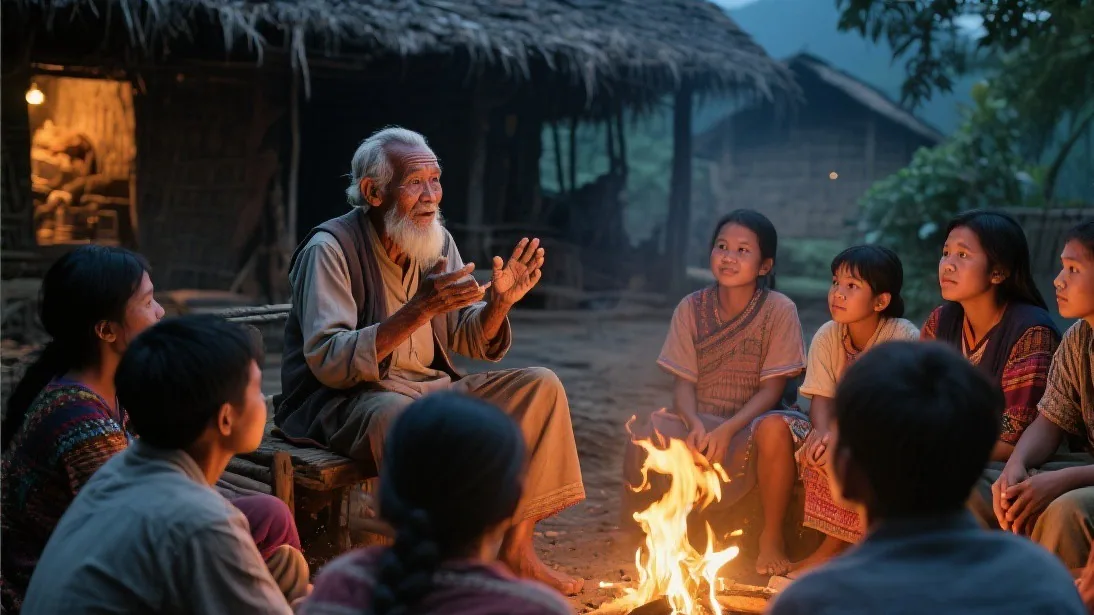
Think about the time I spent in Vietnam's Mekong Delta. Instead of booking a standard tour, I arranged a homestay through a local contact. The family taught me to harvest rice, catch fish with traditional nets, and cook over an open fire. Those three days cost less than one night in a hotel and provided memories no luxury resort could match.
For longer stays, monthly apartment rentals are dramatically cheaper than nightly rates. In Chiang Mai, a studio apartment that costs 25 dollars per night on Airbnb drops to about 400 dollars per month, which is roughly 13 dollars per night. In Lisbon, a one-bedroom apartment that costs 80 euros per night drops to about 900 euros per month, or 30 euros per night. The sweet spot for monthly rentals is to book one or two nights on a platform like Airbnb to inspect the place, then negotiate directly with the owner for a longer stay. In my experience, owners almost always prefer direct bookings because they avoid platform fees, and they will pass some of that savings on to you.
Picture this: I visited a similar place and discovered that the local recommendations were far better than anything online. One shop owner pointed me to a hidden spot that became the highlight of my entire trip.
Eating Well on a Budget
Food is the area where budget travelers make the most common mistakes, and also the area where smart choices can save the most money. The single most effective food strategy is to eat where locals eat, not where tourists eat. In Hanoi, a bowl of pho at a tourist-oriented restaurant near the Old Quarter costs 80,000 to 120,000 dong, about 3.50 to 5 dollars. The same bowl of pho, often better, at a neighborhood stall three blocks away costs 30,000 to 40,000 dong, about 1.30 to 1.75 dollars. The difference adds up fast. Over 30 days, that 2-dollar-per-meal savings totals 180 dollars if you eat out twice a day.
Street food is your best friend as a budget traveler, and the safety concerns that many Western travelers have about it are largely overblown. The rule is simple: eat at stalls with high turnover. If there is a line of locals waiting, the food is fresh and safe. In Bangkok, the street food along Yaowarat Road in Chinatown is legendary, and a full meal of pad thai, grilled satay, and mango sticky rice costs about 4 dollars. In Mexico City, the taco stands in the Condesa and Roma neighborhoods serve extraordinary food for 1 to 2 dollars per taco. In Istanbul, the simit vendors on every corner sell fresh bread rings for about 15 cents. These are not compromises. They are some of the best meals you will have anywhere.
Cooking your own meals is the most powerful budget strategy of all, and it is easier than most travelers think. Even if your accommodation does not have a full kitchen, many hostels have a communal kitchen, and a simple meal of pasta with vegetables and a fried egg costs about 2 dollars to make. I typically cook breakfast and one other meal per day and eat out once. This cuts my food budget roughly in half compared to eating every meal at a restaurant. When I do eat out, I make it count by choosing one good meal per day rather than three mediocre ones. A 15-dollar dinner at a great local restaurant is more satisfying than three 5-dollar meals at tourist traps.
Saving on Transportation
Flights are usually the single biggest expense of any trip, and saving on them requires strategy. Google Flights is my primary tool, and I use its "explore" feature to find the cheapest destinations from my home airport for any given date range. I also use Skyscanner's "whole month" view, which shows the cheapest days to fly in any given month. The difference between flying on a Tuesday and a Saturday can be 30 to 50 percent. Flexibility with dates and destinations is the single most powerful money-saving tool in travel.
For regional transportation, overnight buses and trains are a budget traveler's secret weapon. You save on both transportation and one night of accommodation. In Vietnam, the overnight train from Hanoi to Da Nang has beds for 25 to 40 dollars, and you wake up in a new city having spent nothing on a hotel. In Argentina, the overnight bus from Buenos Aires to Mendoza has fully reclining seats, meals, and wine service for about 35 dollars. In Europe, overnight trains like the OBB Nightjet from Vienna to Venice cost 40 to 80 euros and include a bed. I always book overnight transport for routes that take longer than six hours, and it has saved me thousands of dollars over the years.
Walking is free, and it is often the best way to see a city. I walk an average of 15,000 steps per day when traveling, which is roughly 10 kilometers. This alone saves me 5 to 10 dollars per day in local transportation. When walking is not practical, I use public transit. Every major city has a transit card that offers unlimited rides for a day, a week, or a month, and these almost always cost less than individual tickets. In Lisbon, a 24-hour transit card costs 6.80 euros and covers the metro, buses, trams, and the famous Elevador de Santa Justa. In Tokyo, a 24-hour metro pass costs 600 yen, about 4 dollars, and covers the entire network. These small savings compound rapidly over a multi-week trip.
The Psychology of Budget Travel
One of the things that surprised me most about budget travel is how quickly my perception of money shifted. In my normal life, I think nothing of spending 6 dollars on a coffee and a pastry at my local cafe. On the road, 6 dollars is half my daily food budget, and I would never spend it on a single coffee. This is not deprivation. It is a recalibration of what things are worth. When you realize that a 2-dollar bowl of pho in Hanoi is one of the best meals you have ever had, the 20-dollar bowl of pasta at a tourist restaurant in Rome starts to seem not just expensive but absurd.
Budget travel also forces you to interact more with the local culture. When you eat at street stalls, take public buses, and stay in neighborhood guesthouses, you are constantly in contact with local people. When you stay in international hotels, eat at restaurants with English menus, and take private taxis, you are in a tourist bubble that insulates you from the place you came to experience. Budget travel does not just save you money; it gives you a richer, more authentic travel experience. Some of my most memorable travel moments, a conversation with a retired fisherman in Portugal, being invited to a family dinner in Vietnam, learning to make tortillas from a grandmother in Oaxaca, happened specifically because I was traveling on a budget and ended up in places and situations that money would have insulated me from.
The final psychological benefit is the confidence that comes from knowing you can take care of yourself anywhere. When you have Explore a foreign city on a tight budget, negotiated a room rate in broken Spanish, found a meal for a dollar, and figured out the local bus system without help, you develop a self-reliance that permeates every aspect of your life. Budget solo travel is not just a way to see the world cheaply. It is one of the most effective personal development programs available, and it costs less than a semester of therapy.