When I first arrived, I was overwhelmed. But then something unexpected happened.
I've learned that Interestingly, I stood on the deck of the catamaran crossing Lago Argentino and watched a wall of ice the size of a city block crack, groan, and collapse into the water. The sound, like a cannon shot followed by a sustained thundering roar, echoed across the lake for thirty seconds. A wave radiated outward from the impact point and rocked our boat.
I still remember the smell of fresh bread from that tiny bakery on the corner. The owner, an elderly woman with flour on her apron, insisted I try her grandmother's recipe. It was the best thing I ate that entire trip.
Here's what I believe: The part nobody talks about? The couple next to me held hands. I held my breath. This was the Perito Moreno Glacier, and it was the moment I understood why Patagonia has been haunting the imaginations of travelers for over a century. Nothing in my previous travel experience had prepared me for the scale of this place.
"I have found out that there ain't no surer way to find out whether you like people or hate them than to travel with them." — Mark Twain
When to Go: Timing Your Patagonia Trip
I've found that Patagonia's weather is famously unpredictable, and timing your trip correctly is one of the most important decisions you will make. The primary travel season runs from November to March, which is the Southern Hemisphere's summer. Within that window, December through February offers the warmest temperatures and the longest daylight hours, with sunset in some areas not occurring until 10 p.m.
What I learned the hard way: But these are also the busiest and most expensive months. I visited in late November, the beginning of the season, and found a sweet spot: the weather was already mild, the trails were open, and the crowds had not yet arrived. Daytime temperatures in El Calafate and El Chalten ranged from 10 to 18 degrees Celsius, which is comfortable for hiking with proper layers.
The shoulder months of November and March offer the best balance of decent weather, manageable crowds, and lower prices. In March, the autumn colors in the Patagonian forests are spectacular, with the lenga trees turning shades of red and gold. April and October are possible but riskier: some trails and accommodations close, and weather can be severe.
What I learned the hard way: May through September is winter, and while some adventure operators offer ice hiking and skiing, most of the region is inaccessible to casual travelers. Whenever you go, the single most important thing to pack is layers. Patagonian weather can change from sunny and calm to windy and freezing in under an hour. A base layer of merino wool, a fleece mid-layer, a waterproof windproof outer layer, and a warm hat and gloves will handle virtually any condition you encounter.
Wind is the defining characteristic of Patagonian weather. The region sits at the southern tip of the South American continent, where there is nothing between it and Antarctica to slow the westerly winds. Gusts of 80 to 100 kilometers per hour are common, and they can make hiking, driving, and even walking difficult.
Turns out, What I learned the hard way: I experienced a full day of 90 km/h winds in El Chalten that made it impossible to hike the trails to Fitz Roy. Rather than being frustrated, I used the day to explore the town, visit the visitor center, and drink coffee at a cafe while watching the clouds tear across the sky above the mountains. Flexibility is not optional in Patagonia; it is a survival skill.
El Calafate and the Perito Moreno Glacier
El Calafate is the gateway to Los Glaciares National Park and the most convenient base for visiting the Perito Moreno Glacier. The town is on the shore of Lago Argentino, about 80 kilometers from the glacier, and has a full range of accommodation, restaurants, and tour operators. I flew from Buenos Aires to El Calafate on Aerolineas Argentinas for about 180 dollars.
Here's what most people miss: The flight takes about three and a half hours. The town itself is pleasant but touristy, with a main street lined with travel agencies, souvenir shops, and restaurants. A comfortable daily budget in El Calafate is 60 to 90 dollars, including accommodation, food, and activities. The Perito Moreno Glacier is the undisputed highlight of the area, and it deserves every superlative that has been applied to it. The glacier is about 5 kilometers wide at its terminus, rises 60 meters above the surface of Lago Argentino, and extends 30 kilometers back into the Andes.
What I learned the hard way: It is one of the few glaciers in the world that is still growing rather than retreating, and the constant calving of ice into the lake creates a continuous spectacle of collapsing ice, thundering sounds, and waves. The national park entrance fee is 5,000 Argentine pesos, about 5 dollars at the official exchange rate, though the actual cost depends on how you exchange your money. The walkways and viewing platforms in front of the glacier allow you to get within 300 meters of the ice wall and spend hours watching the calving.
For a more immersive experience, book a mini-trekking excursion on the glacier itself. Hielo y Aventura, the only authorized operator, offers a "Big Ice" trek that includes about three hours of walking on the glacier with crampons, costing about 95 dollars. The standard mini-trek, which includes about an hour and a half on the ice, costs about 65 dollars.
Here's what most people miss: Both include a boat ride to the glacier, crampons, and a guided walk among crevasses, ice formations, and small lagoons of meltwater on the glacier surface. I did the Big Ice trek and it was one of the most extraordinary experiences of my traveling life. Standing on ice that is thousands of years old, surrounded by a Scene of blue and white that looks like another planet, is a perspective-shifting experience. Book well in advance, as these tours sell out days or even weeks ahead during peak season.
El Chalten: Trekking Capital of Patagonia
El Chalten is a small town at the northern end of Los Glaciares National Park, about three hours by bus from El Calafate. It exists almost entirely for trekking, and it is the base for accessing the trails to Mount Fitz Roy and Cerro Torre, two of the most iconic peaks in South America.
Let me be straight with you: The town has no ATM and limited cell service, which adds to its frontier atmosphere. Accommodation ranges from campsites at 5 to 10 dollars per night to hostels and guesthouses at 25 to 50 dollars per night. I stayed at the Hostel Aylen Aike, which offered a private room with breakfast for 35 dollars per night and had a communal kitchen where I cooked most of my meals.
Interestingly, The two must-do hikes in El Chalten are the Laguna de los Tres trail to Fitz Roy and the Laguna Torre trail to Cerro Torre. The Laguna de los Tres trail is the more demanding of the two: a 21-kilometer round trip with about 1,000 meters of elevation gain. The trail starts from the edge of town and takes about seven to nine hours round trip.
The unexpected part? The final section, a steep climb of about 400 meters in the last kilometer, is challenging but rewards you with a view of Fitz Roy reflected in a glacial lake that is, without exaggeration, one of the most beautiful sights I have ever seen. I started the hike at 6 a.m. to avoid the afternoon winds and had the viewpoint almost entirely to myself for about thirty minutes before other hikers began arriving.
The Laguna Torre trail is a gentler 20-kilometer round trip with about 500 meters of elevation gain, taking about six to seven hours. The trail passes through lenga forest, crosses several streams, and ends at a glacial lake at the base of Cerro Torre, a jagged granite peak that is one of the most difficult mountains in the world to climb.
From my experience, On the day I hiked it, the peak was shrouded in clouds, and the lake was filled with icebergs that had calved from the glacier at its far end. The sound of the glacier cracking echoed across the valley at irregular intervals, a deep, resonant boom that reminded me how alive and Active this Scene is. Both trails are well-marked and do not require a guide, though the weather can change rapidly and you should carry a map, warm layers, food, and water regardless of how short the hike appears.
Think about it this way: I visited a similar place and discovered that the local recommendations were far better than anything online. One shop owner pointed me to a hidden spot that became the highlight of my entire trip.
Take Maria's family restaurant in Lisbon's Alfama district. For three generations, they've served the same codfish recipe. The secret? They still buy from the same fisherman who delivers at 5 AM daily. When I visited last spring, Maria explained how tourism changed their neighborhood but their kitchen remained exactly as her grandmother left it.
Traveler's Tip
Exchange your money for Argentine pesos at the official "blue dollar" rate using Western Union, which is available in most Argentine cities. The blue dollar rate can be 50 to 100 percent better than the official bank rate, effectively cutting the cost of your entire trip in half. Download the "Dolar Blue" app for the current rate. Also, carry cash in El Chalten, as there is no ATM.
Think about it this way: I visited a similar place and discovered that the local recommendations were far better than anything online. One shop owner pointed me to a hidden spot that became the highlight of my entire trip.
Torres del Paine: Chile's Crown Jewel
On the Chilean side of Patagonia, Torres del Paine National Park is the region's other must-visit destination. The park is about 150 kilometers north of Puerto Natales, the nearest town with an airport. I flew from Santiago to Punta Arenas on Sky Airline for about 80 dollars, then took a two-and-a-half-hour bus ride to Puerto Natales for about 15 dollars.
The part nobody talks about? From Puerto Natales, a two-hour bus ride brings you to the park entrance. The park entrance fee is 35 dollars for foreign adults in high season, valid for up to three days. The park offers two main trekking circuits: the W Trek, which takes four to five days and covers about 80 kilometers, and the O Circuit, a full loop that takes eight to ten days and covers about 120 kilometers.
I hiked the W Trek over five days and it was one of the best trekking experiences of my life.
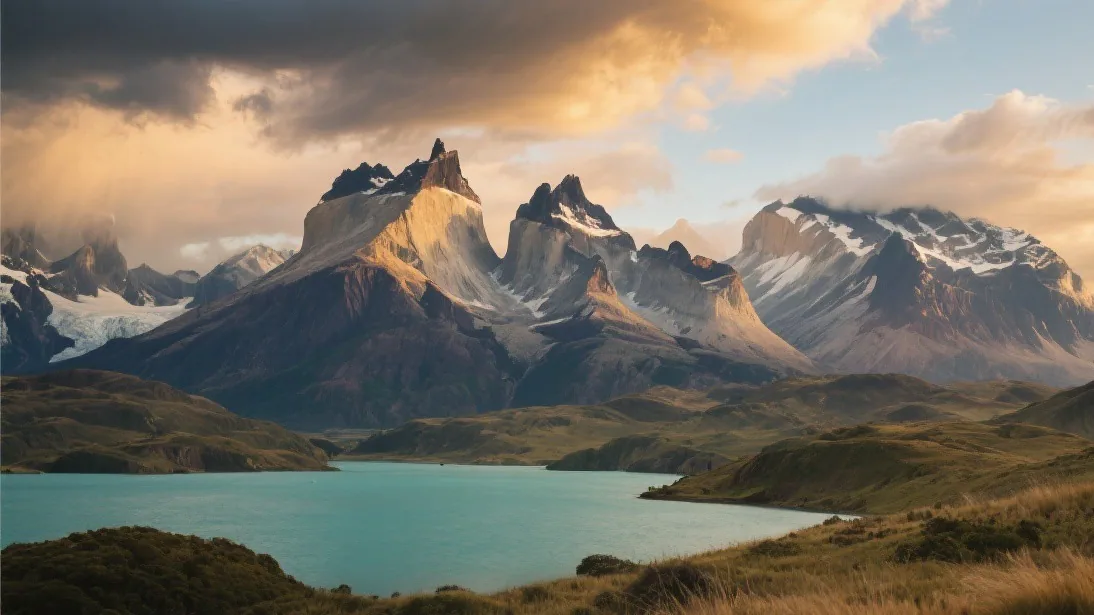
Here's what most people miss: The trek takes its name from the W-shaped route on the map, with three main spurs leading to the park's most spectacular viewpoints: the Base Torres viewpoint, where you stand at the foot of the three granite towers that give the park its name; the French Valley, a glacial valley surrounded by hanging glaciers and granite spires; and the Grey Glacier viewpoint, where you can see the glacier calving into Lago Grey. Each of these viewpoints is accessible as a day hike from refugios, or mountain lodges, along the trail.
Accommodation on the W Trek ranges from campsites at 10 to 15 dollars per night to refugios with beds and meals for 60 to 100 dollars per night. I used a combination: camping for two nights and staying in refugios for two nights. The refugios, operated by companies like Vertice and Las Torres, provide bunk beds, shared bathrooms, and the option to buy meals.
What I learned the hard way: A dinner at a refugio costs about 25 to 35 dollars and typically includes soup, a main course, and dessert. Booking refugios and campsites in advance is essential during peak season; reservations open in October for the following summer and fill up within weeks. I booked through the Las Torres Reservations website four months ahead and got my preferred dates, but some campsites were already sold out.
The Tierra del Fuego and Ushuaia
Ushuaia, the southernmost city in the world, is often included in Patagonian itineraries, and while it is not in the same league as Los Glaciares or Torres del Paine for trekking, it offers a unique set of experiences that make it worth the detour. The city sits on the Beagle Channel, surrounded by mountains, and has a frontier-town atmosphere that is unlike anywhere else in Argentina.
The part nobody talks about? I flew from El Calafate to Ushuaia on Aerolineas Argentinas for about 120 dollars. The flight takes about two hours and crosses the southern Andes, offering views of glaciers and mountains that are worth the ticket price alone. The most popular excursion from Ushuaia is the boat trip along the Beagle Channel to the penguin colonies at Isla Martillo. Several operators offer this trip, including Piratour and Canal Sur, and prices range from 60 to 100 dollars depending on the duration and whether the tour includes a landing on the island.
The unexpected part? I booked with Piratour for 85 dollars, and the five-hour trip included views of sea lions, cormorants, and a colony of Magellanic and Gentoo penguins on Isla Martillo. Walking among the penguins, which showed no fear of humans and waddled within a few feet of us, was one of the most joyful wildlife experiences I have ever had. The boat also passed Isla de los Lobos, a sea lion colony where dozens of sea lions lounged on the rocks and barked at our boat as we drifted past.
The Tierra del Fuego National Park, about 12 kilometers west of Ushuaia, offers several hiking trails of varying difficulty. The Sendero Costera, a coastal trail that runs along the shore of the Beagle Channel, is an easy two-hour walk through sub-Antarctic forest with views of the channel and the mountains on the Chilean side. The park entrance fee is about 5 dollars.
What I learned the hard way: For a more challenging hike, the trail to Laguna Esmeralda takes about four hours round trip and passes through peat bogs, lenga forest, and open valleys with views of the surrounding mountains. I hired a taxi to the trailhead for about 25 dollars round trip and hiked the trail on a clear day when the reflections of the mountains in the laguna were perfect. Ushuaia's daily budget is similar to El Calafate, about 60 to 90 dollars, with accommodation, food, and one activity.
Practical Tips for Patagonia
Getting to Patagonia requires planning and patience. Most international travelers fly into Buenos Aires or Santiago and then take domestic flights to the regional airports. Aerolineas Argentinas flies from Buenos Aires to El Calafate and Ushuaia. LATAM and Sky Airline fly from Santiago to Punta Arenas.
In practice, The part nobody talks about? Domestic flights should be booked well in advance, as they are often the first thing to sell out during peak season. Expect delays. Patagonian weather frequently disrupts flight schedules, and I had one flight delayed by six hours and another canceled entirely. Build buffer days into your itinerary to account for this. I recommend at least two buffer days for a two-week trip.
Money management in Argentina requires attention. The country has a complex currency system with multiple exchange rates. The "blue dollar" rate, available through Western Union or cuevas, unofficial exchange offices, is significantly better than the official bank rate. When I visited, the official rate was about 350 pesos to the dollar, while the blue rate was about 900 pesos to the dollar.
From my experience, Using the blue rate effectively doubled my purchasing power. Carry cash in US dollars or euros to exchange. Credit cards are accepted in many places but will be charged at the official rate, which means you will pay roughly twice as much. In Chile, the situation is simpler: the Chilean peso is stable, credit cards are widely accepted, and ATMs are reliable.
Finally, manage your expectations about weather. Patagonia is not a place where you can guarantee blue skies and perfect conditions. Some of my most memorable experiences happened in bad weather: watching Fitz Roy emerge from the clouds for five minutes before disappearing again, standing in a Patagonian windstorm that nearly blew me off my feet, seeing a rainbow appear over the Grey Glacier during a hailstorm.
Here's what most people miss: The Scene is so dramatic that even in poor weather, it is extraordinary. Pack layers, bring rain gear, carry extra food and water, and accept that the weather will do what it wants. Patagonia is not a destination you control. It is a destination you surrender to, and that surrender is part of what makes it so powerful.