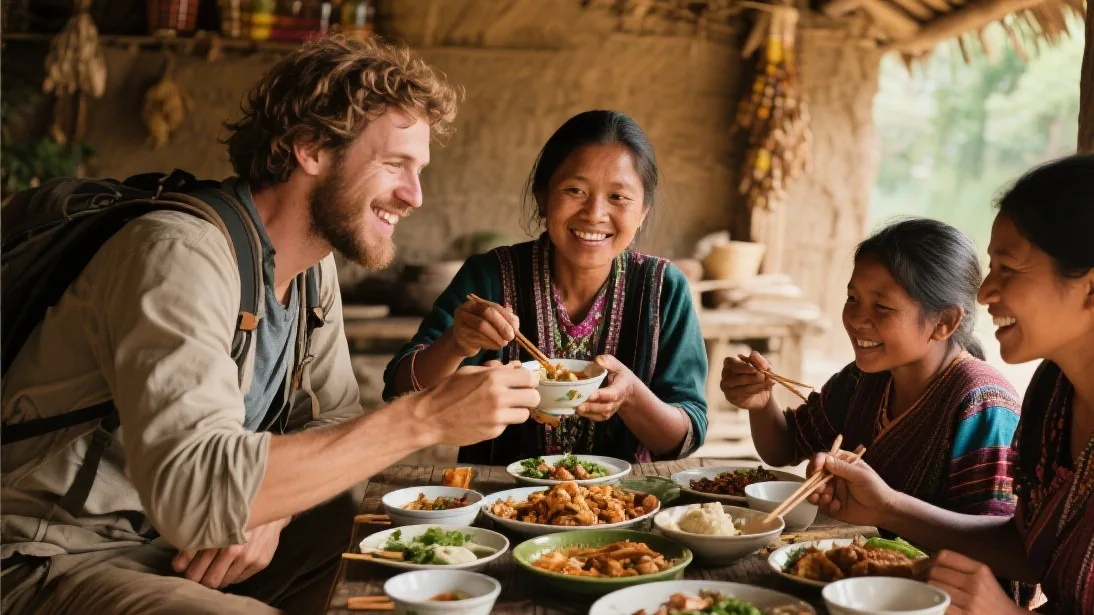
When I first arrived, I was overwhelmed. But then something unexpected happened.
I spent two weeks in Cambodia building a school that was never used. The walls went up, the paint went on, and a group of us posed for photos with the children who would supposedly attend. Six months later, a friend who lives in the area told me the building was empty: the community had not asked for a school, and there were already three within walking distance. That experience forced me to rethink everything I believed about volunteering abroad.
The Voluntourism Problem
My advice? Always The voluntourism industry is worth an estimated $2 billion annually, and a significant portion of that money is spent on programs that do more harm than good. The most visible example is orphanage volunteering in Southeast Asia. Research by UNICEF and Save the Children has documented that the demand from foreign volunteers has actually created a supply of "orphans": children are recruited from poor families and placed in institutions to attract donations and volunteer fees, despite having at least one living parent. In Cambodia, the number of orphanages increased by 75 percent between 2005 and 2015, even as the number of actual orphans decreased. Volunteering at these institutions, even with the best intentions, perpetuates a system that separates children from their families.
My take on this? Short-term teaching placements are another problematic area. Placing unqualified volunteers in classrooms for two to four weeks disrupts the education of children who need consistency. I have met volunteers who arrived at a school in Nepal, taught for three weeks, and left, only to be replaced by another volunteer who taught completely different material. The children received no coherent education during the entire period. Meanwhile, the volunteer fees paid to the placement organization could have hired a qualified local teacher for a year. The math is stark: a volunteer paying $2,000 for a two-week placement could instead fund a local teacher's salary for six to twelve months in most developing countries.
Construction volunteering often suffers from a similar mismatch. Unskilled volunteers building structures in communities without adequate supervision or follow-up can produce buildings that are unsafe, culturally inappropriate, or simply unnecessary. The school I helped build in Cambodia is a case in point. A more responsible approach is to fund local construction crews, which provides employment, ensures quality, and keeps money circulating in the local economy. If you want to contribute physically, look for programs where volunteers work alongside skilled local tradespeople on projects that the community has identified as needed, rather than projects designed to provide a "volunteer experience."
How to Identify Responsible Programs
The first question to ask any volunteer organization is: "How does the community benefit, and how do you measure that benefit?" Responsible organizations will have specific, measurable outcomes. GVI (Global Vision International), for example, publishes annual impact reports that detail the results of their conservation and community development programs in 13 countries. Their marine conservation program in Seychelles has contributed data to the Seychelles Ministry of Environment that directly influenced fishing policy. Their community education program in Nepal reports the number of students who progressed to the next grade level, not just the number of volunteers who participated.
Transparency about fees is another indicator. A responsible organization will tell you exactly how your money is spent. Habitat for Humanity, which runs volunteer building programs in over 70 countries, publishes a financial breakdown showing that approximately 82 cents of every dollar goes directly to housing programs. Their Global Village program costs about $1,800 to $2,500 per person for a one- to two-week build, which covers the cost of building materials, local labor, and in-country logistics. The volunteer labor is a supplement to, not a replacement for, skilled construction workers.
Programs that require specific skills or minimum time commitments are generally more responsible than those that accept anyone for any duration. Engineers Without Borders requires volunteers to be licensed engineers or engineering students, and projects are designed to provide infrastructure that the community will maintain after the volunteers leave. The Peace Corps requires a 27-month commitment, which allows volunteers to learn the local language, build relationships, and complete projects that have lasting impact. Short-term programs that accept volunteers with no relevant skills for one or two weeks should be approached with extreme skepticism.
Conservation Volunteering That Works
Wildlife conservation volunteering has a better track record than community development volunteering, in part because the work is more specialized and the outcomes are easier to measure. The Sea Turtle Conservation program run by GVI in the Greek islands of Kefalonia and Zakynthos involves volunteers in monitoring nesting loggerhead turtles, protecting nests from predation, and collecting data on hatchling success rates. The program costs about $2,200 for two weeks, and the data collected has been published in peer-reviewed scientific journals and used by the Greek government to designate marine protected areas.
In Costa Rica, the Tortuguero Conservation Program run by the Sea Turtle Conservancy is one of the longest-running sea turtle research programs in the world. Volunteers patrol the beach at night during nesting season (July to October), tag nesting turtles, count eggs, and monitor nests until they hatch. The program costs about $1,800 for two weeks, including accommodation and meals at the research station. Volunteers do not need prior experience, as training is provided on arrival. The data collected has been instrumental in the recovery of green turtle populations in the Caribbean, which have increased by over 400 percent since the program began in the 1950s.
In South Africa, the African Penguin and Seabird Sanctuary in Cape Town rehabilitates injured and oiled penguins and other seabirds. Volunteers assist with feeding, cleaning enclosures, and releasing recovered birds. The program costs about $800 for two weeks, and accommodation is provided in a volunteer house near the sanctuary. The work is physically demanding and emotionally challenging, but the success rate for penguin rehabilitation is over 80 percent, and volunteers can see the direct impact of their work when a recovered bird is released back into the wild.
Consider what happened when I visited a similar place and discovered that the local recommendations were far better than anything online. One shop owner pointed me to a hidden spot that became the highlight of my entire trip.
Look at what happened in Iceland last year. The popular Golden Circle route became so crowded that locals started sharing alternative paths. A farmer named Gunnar opened his private land for small groups. His hot spring, unknown to most tourists, offers a view of the northern lights that rivals any expensive tour.
"The best way to find yourself is to lose yourself in the service of others." — Mahatma Gandhi
Community Development Done Right
Responsible community development volunteering starts with the community's own priorities, not the volunteer's desire for a meaningful experience. One model that works is the "community-led" approach, where local organizations define the projects and the role of volunteers. In Rwanda, the Rwanda Village Concept Project, run by medical students from the University of Rwanda, invites international volunteers to assist with public health education, water sanitation projects, and agricultural training that local communities have identified as priorities. Volunteers pay their own expenses but do not pay a program fee, ensuring that all money goes directly to the project.
A perfect example: I once visited a similar place and discovered that the local recommendations were far better than anything online. One shop owner pointed me to a hidden spot that became the highlight of my entire trip.
Microfinance volunteering is another area where skilled volunteers can add real value. Kiva does not place volunteers directly, but organizations like Zidisha and Opportunity International occasionally recruit volunteers with financial or business backgrounds to provide training and mentoring to small business owners in developing countries. These programs typically require a minimum commitment of three to six months and relevant professional experience. The impact is measurable: borrowers who receive business mentoring show higher repayment rates and higher business growth than those who receive loans alone.
Teaching English is the most common form of volunteer travel, and it can be done responsibly if certain conditions are met. The key is to work as a teaching assistant alongside a qualified local teacher, not as the primary instructor. Programs like WorldTeach place volunteers in classrooms as supplementary English teachers for a full academic year, providing consistency that short-term programs cannot match. WorldTeach volunteers receive three weeks of training before placement, are assigned to schools that have specifically requested an English teacher, and are supported by a local program manager throughout their service. The program costs about $3,000 to $4,000 for a full year, including housing and a living stipend.
What to Ask Before You Sign Up
Before committing to any volunteer program, ask the organization these five questions. First, "What specific need does this program address, and how was that need identified?" If the answer is vague or the need was identified by the organization rather than the community, that is a red flag. Second, "What happens to the project after volunteers leave?" Programs that have no sustainability plan are creating dependency, not development. Third, "What percentage of my fee goes directly to the project versus administration and volunteer coordination?" Anything below 60 percent going to the project is questionable.
Fourth, "Can I speak with former volunteers who are not featured on your website?" Testimonials on organization websites are curated. Independent reviews on platforms like GoOverseas, Volunteer Forever, and Trustpilot provide a more balanced picture. Look specifically for reviews that mention problems, as these reveal how the organization handles challenges. Fifth, "What qualifications or training do your local staff have?" Programs that employ local professionals with relevant expertise (teachers, engineers, conservation biologists) are more likely to produce meaningful outcomes than programs staffed primarily by short-term foreign volunteers.
Finally, be honest with yourself about your motivations. If the primary reason you want to volunteer is to have a meaningful travel experience, to build your resume, or to take photos for social media, consider whether a tourist trip combined with a donation to a reputable local organization might achieve more good with less potential for harm. There is no shame in being a tourist. The harm comes from pretending that tourism is something else.
Alternatives to Traditional Volunteering
Skilled volunteering, where you contribute your professional expertise, is almost always more valuable than unskilled volunteering. If you are a doctor, nurse, or medical student, organizations like Doctors Without Borders, Partners In Health, and the Red Cross offer placements that provide critical healthcare in underserved areas. If you are an engineer, Engineers Without Borders and Water Mission design and build water, sanitation, and energy infrastructure. If you are a lawyer, the International Rescue Committee and Asylum Access provide legal aid to refugees and asylum seekers. These programs require specific qualifications and longer commitments, but the impact per volunteer is orders of magnitude higher than in unskilled programs.
Remote volunteering has become increasingly viable and eliminates many of the problems associated with in-person voluntourism. Organizations like the UN Online Volunteering platform, Zooniverse, and Translators Without Borders connect skilled volunteers with projects that can be done remotely: translating documents, analyzing satellite imagery, designing educational materials, or providing IT support. These opportunities are free, require no travel, and allow you to contribute over a sustained period rather than in a concentrated burst. I have been translating educational materials for a Liberian NGO through Translators Without Borders for two years, and the cumulative impact of that work far exceeds anything I could have accomplished in a two-week trip.
Responsible travel itself can be a form of contribution. Choosing locally owned hotels and restaurants, hiring local guides, buying from local artisans, and paying fair prices all keep money in the communities you visit. In many developing countries, tourism is the largest sector of the economy, and the choices travelers make about where to spend their money have a direct and measurable impact on local livelihoods. A two-week trip where you spend $2,000 entirely on locally owned businesses arguably does more economic good than a two-week volunteer program where $1,500 of your $2,000 fee goes to the organization's headquarters in a developed country.