My friend laughed when I told her my plan. Turns out, she was wrong about everything.
I learned the hard way that travel safety is not about paranoia. It is about habits. After having my wallet lifted on the Barcelona Metro and my phone snatched in Ho Chi Minh City, I rebuilt my approach to travel security from scratch. Here is what actually works, based on years of mistakes and conversations with security professionals, fellow travelers, and locals who deal with tourists every day.
"Security is mostly a superstition. Life is either a daring adventure or nothing." — Helen Keller
Pickpocket Hotspots and How to Beat Them
I've learned that Pickpocketing is the single most common crime against travelers, and it happens in places you would not expect. The Barcelona Metro, specifically the L3 line between Les Corts and Diagonal, is notorious for organized pickpocket teams who work in groups of three or four. One person bumps you, another creates a distraction, and a third lifts your wallet or phone in the two seconds your attention is elsewhere. I watched it happen to a tourist at the Sagrada Familia station: a woman dropped her map directly in front of him, and while he bent to pick it up, her accomplice slid a hand into his back pocket. The whole thing took less than three seconds.
Here's what I believe: Similar operations exist on the Paris Metro (especially Line 1 between Chatelet and Louvre-Rivoli), at the Trevi Fountain in Rome, on the BTS Skytrain in Bangkok during rush hour, and in the crowded markets of Marrakech. The defense is simple but requires discipline: keep your wallet in a front pocket, never in a back pocket. Use a cross-body bag with a zipper, and keep your hand on it in crowded areas. Carry your phone in a zipped inner pocket rather than a loose outer pocket. In high-risk areas, I use a Pacsafe Venturesafe 25L backpack with built-in wire mesh in the fabric and locking zippers, which makes slash-and-grab theft nearly impossible.
Money belts are worth discussing because opinions vary. I used one for years and found it uncomfortable in hot climates. The alternative I prefer is a hidden pocket sewn inside a pair of travel pants. Brands like Clothing Arts and Lululemon make pants with zippered security pockets that are invisible from the outside. I carry my passport backup, a secondary credit card, and a few folded bills in these pockets, keeping my day-to-day spending money in a regular wallet. If my wallet is stolen, I lose $50 to $100, not my entire trip budget.
Travel Insurance: What You Actually Need
I used to skip travel insurance on short trips to save money. That stopped after a $4,200 emergency room visit in Costa Rica for a cut that required stitches, followed by a separate $800 bill for a canceled flight when I missed my connection due to the hospital visit. Since then, I have bought insurance for every trip, and it has paid for itself multiple times. The two providers I use most are World Nomads (standard plan costs about $120 for two weeks of coverage in most countries) and SafetyWing (about $42 per month for ongoing coverage, designed for digital nomads and long-term travelers).
When comparing policies, look for three specific things. Medical coverage should be at least $100,000, with emergency evacuation coverage of at least $250,000. Medical evacuation is the expensive part: an air ambulance from a remote area in Nepal or Patagonia to a hospital in Bangkok or Santiago can cost $50,000 to $200,000. Trip cancellation coverage should reimburse non-refundable expenses like flights and hotels if you cancel for a covered reason, which typically includes illness, injury, and natural disasters at your destination. Baggage coverage should be at least $1,500, which covers most camera gear setups and electronics.
Read the exclusions carefully. Most policies do not cover pre-existing conditions unless you buy a waiver. Most do not cover activities they consider "extreme," which can include scuba diving below 30 meters, rock climbing, or motorcycle riding unless you add an adventure sports rider. World Nomads is one of the few providers that covers a wide range of adventure activities in their standard policy, which is why it is popular with backpackers and adventure travelers. Always carry your policy number and the emergency assistance phone number in your phone and on a printed card in your wallet.
Securing Your Electronics
A laptop is the most valuable item most travelers carry, and hotel rooms are not as secure as people assume. In hostels, lockers are available but often too small for a 15-inch laptop. In hotels, room safes are useful but can be opened by staff. My approach is to never leave my laptop in my room unless it is in a locked suitcase. The Aer Travel Pack 3 has a built-in laptop sleeve with a lockable zipper, and I lock the entire bag to a fixed object in the room using a thin cable lock like the Targus DEFCON CL. It weighs 170 grams and costs about $25.
Phone theft is increasingly common, and the consequences go beyond the hardware cost. A stolen phone gives the thief access to your email, banking apps, photos, and social media accounts. Before every trip, I enable two-factor authentication on all critical accounts, set up a device-tracking service (Find My for iPhone, Find My Device for Android), and take a photo of my phone's IMEI number, which is needed to file a police report. In cities where phone snatching is common, like London, Amsterdam, and San Francisco, I use a phone lanyard from Phone Lasso that tethers the phone to my belt loop or bag strap.
External hard Guide containing backup photos and documents should be kept separate from your laptop. If your bag is stolen, you do not want to lose both your computer and your backups. I keep my Samsung T7 Shield SSD in a different bag or pocket than my laptop. For extra security, encrypt the Shape using BitLocker (Windows) or FileVault (Mac) so that even if the Shape is stolen, the data is inaccessible without the password. The encryption takes about five minutes to set up and has zero impact on daily use.
Traveler's Tip
Register with your country's embassy or consulate through their online system before traveling to higher-risk destinations. The U.S. State Department's Smart Traveler Enrollment Program (STEP) and the UK's FCDO travel registration are free and take about two minutes. They send you safety alerts for your destination and help the embassy locate you in an emergency.
Transportation Safety
Taxis and ride-sharing services require a different set of precautions depending on the country. In most of Europe, North America, and East Asia, Uber, Bolt, and local equivalents are safe and reliable. In parts of Southeast Asia, Africa, and Latin America, unlicensed taxis are a genuine risk. In Mexico City, only use authorized taxi stands at airports and bus stations, or apps like Cabify and DiDi. In Nairobi, use Uber or Little Cab rather than hailing taxis on the street. In Bali, use Grab or Gojek rather than negotiating with Guide outside hotels, where prices are often inflated by 300 to 500 percent.
Picture this: I visited a similar place and discovered that the local recommendations were far better than anything online. One shop owner pointed me to a hidden spot that became the highlight of my entire trip.
Think about the time I spent in Vietnam's Mekong Delta. Instead of booking a standard tour, I arranged a homestay through a local contact. The family taught me to harvest rice, catch fish with traditional nets, and cook over an open fire. Those three days cost less than one night in a hotel and provided memories no luxury resort could match.
Bus safety varies enormously. In Peru, the bus companies Cruz del Sur and Oltursa have good safety records with professional Guide and well-maintained vehicles, while smaller companies on the same routes may not. In Turkey, Metro Turizm and Pamukkale are reliable. In Argentina, the long-distance bus system is generally excellent, with seats that recline to near-horizontal on overnight routes. Before booking a bus in any country, check recent reviews on platforms like Busbud or Rome2Rio, and look specifically for mentions of safety, road conditions, and Guide behavior.
Consider what happened when I visited a similar place and discovered that the local recommendations were far better than anything online. One shop owner pointed me to a hidden spot that became the highlight of my entire trip.
Riding motorcycles and scooters is one of the most dangerous things travelers do, and the statistics are sobering. The WHO estimates that road traffic injuries are the leading cause of death for travelers aged 15 to 29. In Southeast Asia, scooter rentals are available on almost every corner, and many tourists rent them without any experience. In Thailand alone, an estimated 70 percent of road accident deaths involve motorcycles. If you must ride a scooter, always wear a helmet (bring your own, as rental helmets are often substandard), never ride after drinking, and start slow in an empty parking lot before venturing into traffic. Travel insurance often excludes motorcycle accidents unless you have a valid motorcycle license from your home country.
Food and Water Safety
Foodborne illness affects an estimated 30 to 70 percent of travelers to developing countries, and the consequences range from a mild upset stomach to a week in bed. The standard advice, "boil it, cook it, peel it, or forget it," remains sound, but it is too simplistic for travelers who want to actually enjoy local cuisine. My approach is to eat at places with high customer turnover, which means the food is fresh, and to avoid raw or undercooked meat, unpasteurized dairy, and buffet food that has been sitting at room temperature for more than an hour.
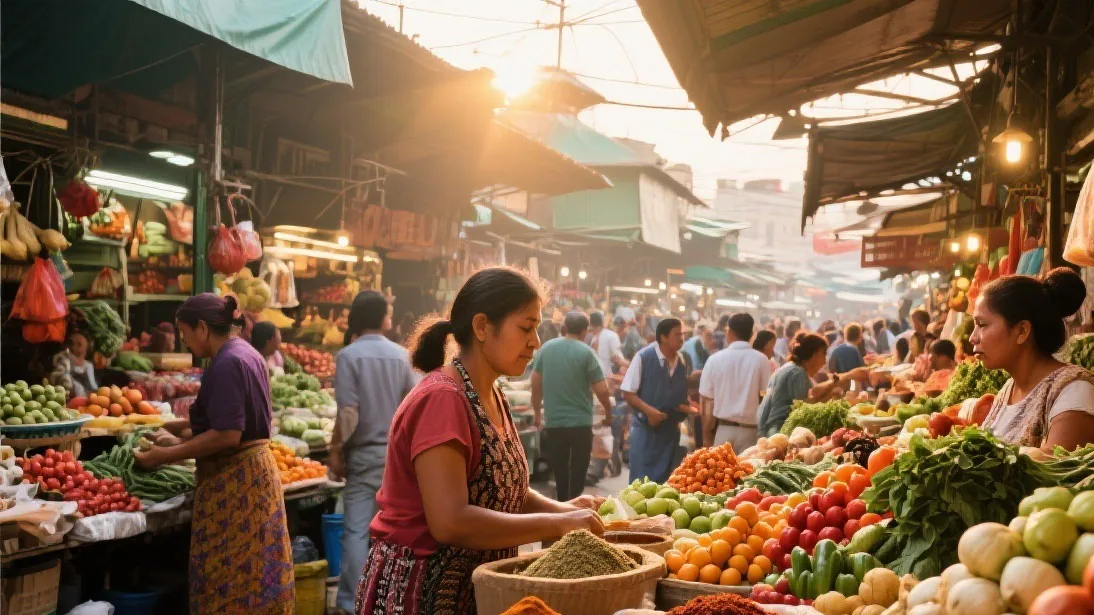
Street food is often safer than restaurant food in developing countries, because you can see the food being prepared in front of you and the high turnover means ingredients are fresh. The busiest stall at a night market in Bangkok, Chiang Mai, or Hanoi is almost always the safest choice. I follow the "cook it in front of you" rule: if the food is being fried, grilled, or boiled at high heat right in front of you, it is almost certainly safe. Cold dishes, pre-prepared salads, and anything with uncooked ice are the items to avoid. In countries where tap water is unsafe, also avoid drinks with ice unless you can confirm the ice is made from filtered or boiled water.
Carry a basic medical kit that includes oral rehydration salts (ORS), loperamide (Imodium) for acute diarrhea, an antacid, and a broad-spectrum antibiotic prescribed by a travel clinic for severe traveler's diarrhea. Ciprofloxacin or azithromycin are commonly prescribed, and a single dose can cut a severe episode from five days to one. ORS packets cost about $5 for a pack of ten and are available at any pharmacy worldwide. Dissolve one in a liter of clean water and sip it slowly over an hour when you feel symptoms coming on. Staying hydrated is more important than any medication.
Digital Security on the Road
Public Wi-Fi networks in hotels, cafes, and airports are convenient but insecure. Anyone on the same network can potentially intercept your data using tools that are freely available online. I use a VPN (Virtual Private Network) on every public network without exception. ExpressVPN, NordVPN, and Surfshark all cost between $2 and $4 per month on annual plans and provide encrypted connections that prevent anyone from snooping on your browsing, email, or banking. The speed reduction is minimal on modern VPNs, and most allow you to connect up to five or six devices simultaneously.
Banking and payment security requires a layered approach. I carry two credit cards from different banks, kept in separate locations. If one is stolen or compromised, I still have the other. I notify both banks of my travel dates and destinations before each trip to prevent fraud alerts from blocking legitimate transactions. For ATM withdrawals, I use only bank-affiliated ATMs during business hours, avoiding standalone machines in convenience stores or on the street, which are more likely to have been fitted with card skimmers. The Citibank and HSBC ATM networks are widely available in major cities worldwide and charge no or low foreign transaction fees.
Before leaving home, I create a secure digital folder (using Google Shape or Dropbox) containing scans of my passport, Guide's license, travel insurance policy, credit cards (front and back), and hotel reservations. I also email a copy of this folder to myself and to a trusted friend or family member. If my physical documents are lost or stolen, I can access digital copies from any device with an internet connection. This simple step saved me in Colombia when my passport was stolen from a hostel in Medellin: I had the digital copy at the consulate the next morning, and the replacement process took three business days instead of two weeks.
Personal Safety in Unfamiliar Places
Trust your instincts. This sounds obvious, but it is the single most effective safety tool you have. If a street feels wrong, turn around and walk back the way you came. If a person makes you uncomfortable, create distance immediately. If a situation feels like a scam, it probably is. In my experience, the travelers who get into trouble are the ones who override their gut feeling because they do not want to seem rude or paranoid. Being polite is not worth being robbed.
Research the specific scams common at your destination before you arrive. In Istanbul, the shoe-shine scam involves a man who "accidentally" drops his brush, picks it up, and then insists on cleaning your shoes before demanding an exorbitant payment. In Paris, the petition scam uses young women holding clipboards who approach you asking you to sign a petition for a charitable cause while an accomplice picks your pocket. In Rio de Janeiro, the mustard scam involves someone spilling a condiment on your shirt and then offering to clean it while an accomplice steals your bag. Knowing about these scams in advance makes them easy to spot and avoid.
Share your itinerary with someone at home. I send a brief daily message to a family member with my location, accommodation name, and plans for the next day. This takes thirty seconds and means that if something goes wrong, someone knows roughly where to start looking. For more remote travel, I carry a Garmin inReach Mini 2, a satellite messenger that works anywhere on earth, including areas with no cell coverage. It costs about $350 for the device and $15 to $65 per month for a subscription, and it can send and receive text messages via satellite, trigger an SOS alert to emergency responders, and share your GPS location with designated contacts.