The plane descended through clouds and emerged above a green island that looked like it had been dropped into the Atlantic from somewhere tropical. São Miguel, the largest of the Azores, is a volcanic island of crater lakes, hot springs, and pastures so intensely green they seem artificial. I had flown from Lisbon in two hours, leaving behind the dry heat of the mainland for a climate that was mild, humid, and constantly changing. The Azores are marketed as Europe's best-kept secret, which is a phrase I usually distrust. In this case, it is accurate. The islands receive a fraction of the visitors that flock to Madeira or the Canary Islands, and the experience is more authentic for it.
São Miguel: Lakes and Furnas
São Miguel is known for its crater lakes, and the most famous are the Sete Cidades, two lakes occupying the same volcanic caldera, one blue and one green, separated by a narrow bridge. I hiked the rim trail on a day when clouds were pouring over the caldera edge like a slow waterfall. The view was intermittent, revealed in glimpses between the mist, which made it more dramatic than a clear day would have been. In Furnas, a village in the eastern part of the island, volcanic activity is still visible. Hot springs bubble in the town center, and locals cook cozido das Furnas, a stew of meat and vegetables, by burying sealed pots in the volcanic ground. The meal takes six hours to cook. I tried it at a restaurant called Tony's. The meat was tender and faintly sulfurous, an acquired taste.
Pico: The Mountain Island
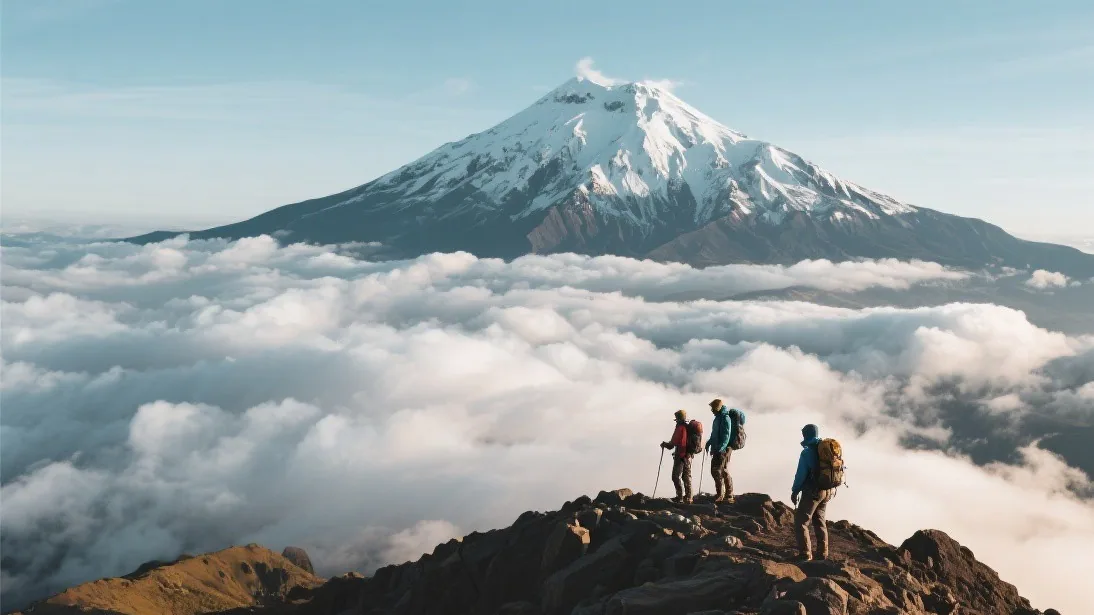
Pico is the second-largest island and is dominated by Mount Pico, a stratovolcano that rises 2,351 meters from the ocean, making it the highest peak in Portugal. I climbed it in August, starting at four in the morning to reach the summit by sunrise. The trail is steep, loose, and unrelenting. Above two thousand meters, the air is thin and the wind is strong. The final section requires scrambling over volcanic rock. From the summit, I could see the islands of Faial and São Jorge, and on a clear day, which this was, the horizon stretched to the curvature of the earth. The descent took almost as long as the ascent, because the loose rock slides under your feet. I reached the trailhead with knees that shook for an hour.
Whales and Marine Life
The Azores are one of the best places in the world for whale watching. The waters around the islands are a feeding ground for sperm whales, blue whales, fin whales, and several species of dolphin. I took a tour from Ponta Delgada with a company called Futurismo. Within an hour, we had spotted a pod of common dolphins and a sperm whale. The sperm whale surfaced three hundred meters from the boat, blew a spout of condensation into the air, and arched its back for a dive. The tail fluke rose vertically and slipped beneath the surface. The guide, a marine biologist named Ana, told me that the same whale had been seen in these waters for three years. She knew it by the pattern of scars on its tail.
Logistics and Costs
SATA Azores Airlines flies direct to Ponta Delgada from Lisbon, Porto, and several European cities. I paid one hundred forty euros round trip from Lisbon. Inter-island flights and ferries connect the archipelago. I stayed on São Miguel for five days and Pico for three, in guesthouses averaging seventy euros per night. Rental cars cost forty euros per day. Food is excellent and affordable. A meal of fresh fish, vegetables, and local cheese cost twelve to eighteen euros. The total cost for eight days was one thousand three hundred euros. The Azores are not a beach destination in the traditional sense. The water is cold, the sand is black, and the weather is unpredictable. But for hikers, nature lovers, and anyone seeking a European destination that does not feel like a theme park, the Azores are unmatched.