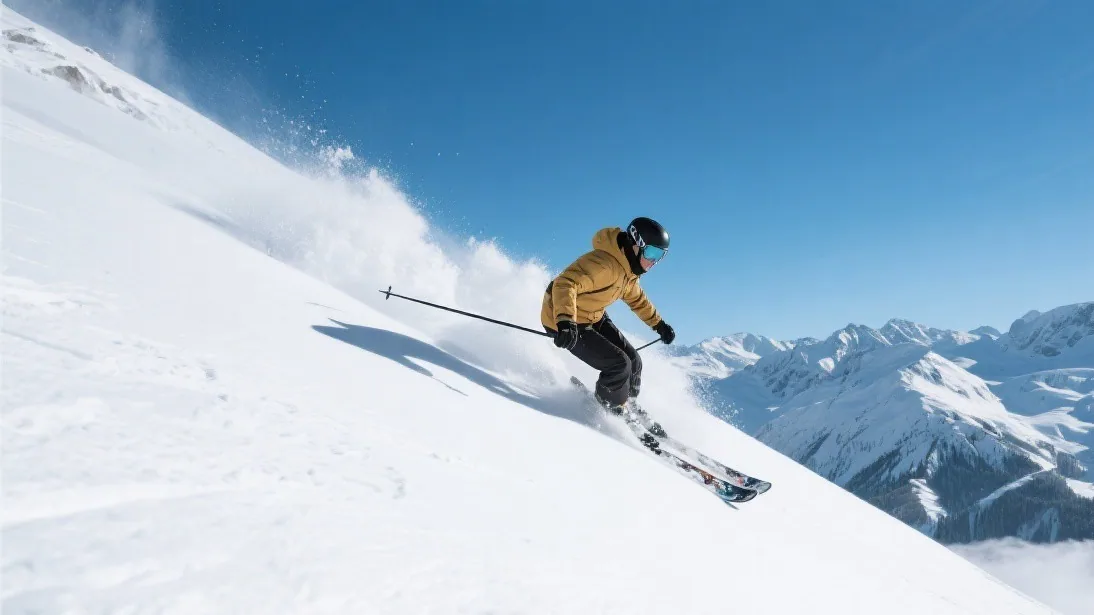
The train left Zermatt in a snowstorm, crawling through a landscape of white that erased the boundary between earth and sky. I was in the first-class cabin of the Glacier Express, the slowest express train in the world, which travels two hundred ninety kilometers from Zermatt to St. Moritz in eight hours. The average speed is thirty-six kilometers per hour. A cyclist could beat it. But speed is not the point. The point is the view: ninety-one tunnels, two hundred ninety-one bridges, and some of the most dramatic alpine scenery on earth, experienced through panoramic windows while eating a three-course meal served at your seat.
The Route and the Scenery
The Glacier Express crosses the Swiss Alps from west to east, passing through the cantons of Valais, Uri, and Graubünden. The highlights include the Oberalp Pass, at two thousand thirty-three meters, where the train stops to let passengers photograph the snow and the chapel; the Rhine Gorge, a canyon of limestone walls that the train follows for twenty kilometers; and the Landwasser Viaduct, a six-arch stone bridge that the train crosses before entering a tunnel carved into a cliff face. I sat in my seat for the entire journey, rotating between the left and right windows depending on which side had the better view. The scenery was so consistently spectacular that I took four hundred photographs and kept only twelve.
First Class vs. Second Class
First class on the Glacier Express costs approximately two hundred seventy Swiss francs, compared to one hundred fifty francs for second class. The difference is worth it. First-class seats are larger, arranged in a one-plus-two configuration rather than two-plus-two, and every seat has a power outlet and a tray table. The panoramic windows extend into the ceiling, creating a glass cocoon that makes the cabin feel like an observation deck. The service includes a welcome drink, a three-course lunch, and afternoon tea with pastries. I had a glass of Swiss riesling, a veal sausage with rösti, and a chocolate mousse that was rich enough to require a nap. The meal was not Michelin-starred, but it was excellent by train standards.
The Experience of Slow Travel
Eight hours on a train sounds long, but the Glacier Express is designed to make the time pass pleasantly. There is no Wi-Fi, which forces you to look out the window or talk to your fellow passengers. I sat across from a retired Swiss engineer who had worked on the maintenance of the railway bridges. He pointed out details that I would have missed: the expansion joints that allow the rails to move in temperature changes, the avalanche barriers on the slopes above, and the water drainage systems that prevent the tunnels from flooding. His knowledge transformed the journey from sightseeing into engineering appreciation. By the time we reached St. Moritz, I understood why the Swiss are proud of their railways. They are not just transport. They are national art.
Practicalities and Costs
The Glacier Express operates year-round, but the most reliable views are in late spring and early autumn, when the snow has melted from the passes but the skies are clear. I traveled in late May and had mixed weather: sunshine in the morning, clouds in the afternoon, and a brief snowstorm at the Oberalp Pass. Reservations are mandatory and should be booked months in advance, especially for first class. I booked four months ahead and paid a reservation fee of forty-four francs. The total cost, including the first-class ticket, reservation, and lunch, was three hundred fifty Swiss francs. It is not cheap. But for a full day of some of the most beautiful scenery in Europe, served with excellent food and wine, it is one of the best value luxury experiences in Switzerland.