I almost skipped this part of my itinerary. Thank goodness I didn't.
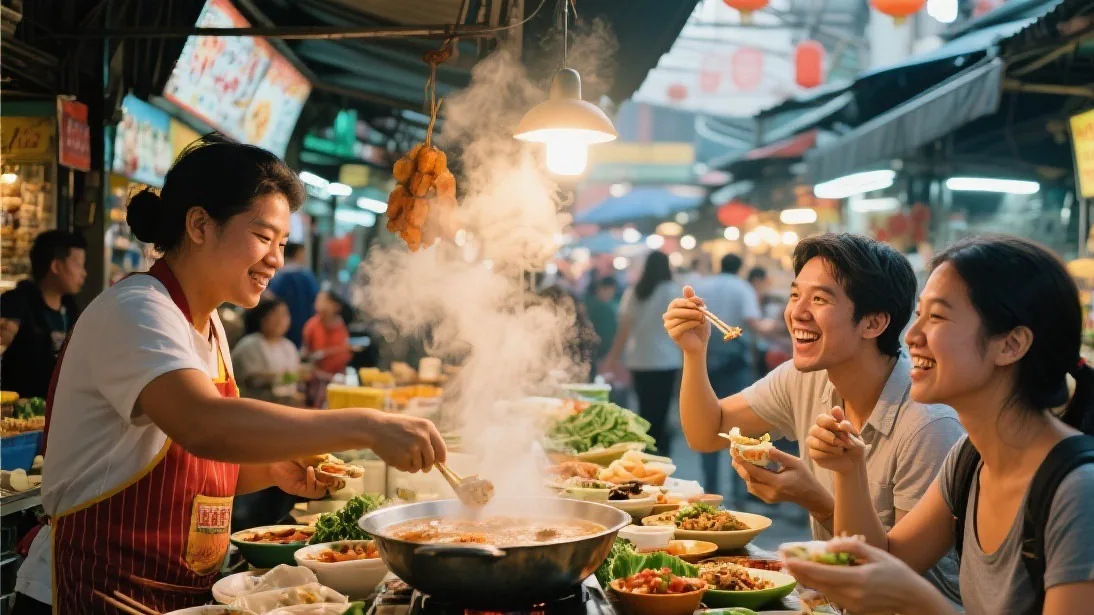
My take on this? My best meal in Bangkok cost 45 baht, about one dollar and thirty cents. It was a plate of pad kra pao gai, holy basil stir-fried with chicken and a crispy fried egg, served over jasmine rice at a stall run by a woman who had been cooking the same dish from the same wok for twenty-three years.
I still remember the smell of fresh bread from that tiny bakery on the corner. The owner, an elderly woman with flour on her apron, insisted I try her grandmother's recipe. It was the best thing I ate that entire trip.
Honestly, Here's what I learned: The wok was seasoned to a deep black, the flames were high enough to singe my eyebrows, and the entire dish was ready in ninety seconds. I have eaten at Michelin-starred restaurants in twelve countries, and that 45-baht plate ranks among the top five meals of my life. Street food is the budget traveler's greatest ally, and this guide covers the specific stalls, dishes, and cities where I have eaten best.
Bangkok: The Street Food Capital
I've found that Bangkok has more street food stalls per capita than any other city in the world, and the quality is consistently extraordinary. The concentration is densest in the area around Yaowarat Road in Chinatown, where the evening market starts setting up around 5 PM and the grills and woks are firing by 6.
The unexpected part? At the T&K Seafood stall on Yaowarat, a plate of grilled jumbo prawns costs 350 baht, about ten dollars, and the prawns are charred over charcoal and served with a spicy jaew dipping sauce. The stall has no sign in English, but you will recognize it by the queue of locals and the smell of grilled seafood that hits you from 20 meters away.
For something cheaper, the pad thai at Thip Samai on Maha Chai Road is a Bangkok institution. The stall has been operating since 1966 and is famous for its "pad thai wrapped in egg," where a thin omelette encases the stir-fried noodles.
That said, A plate costs 100 baht, about three dollars, and the queue can take 30 to 45 minutes during peak dinner hours. Arrive before 6 PM to avoid the longest waits. For dessert, walk to the nearby stall selling roti mataba, a flaky flatbread filled with condensed milk and banana, for 40 baht. It is sweet, rich, and the perfect way to end a Chinatown food crawl.
Breakfast in Bangkok revolves around jok, a rice congee that is the Thai equivalent of chicken soup. At the jok stall on Sukhumvit Soi 38, a bowl of pork jok with a soft-boiled egg, ginger, and crispy garlic costs 60 baht, less than two dollars.
The truth? The stall opens at 6 AM and closes by 10 AM, and the congee is cooked slowly in large pots that have been simmering since before dawn. The texture is silky, the broth is deeply savory, and a bowl of this stuff on a cool Bangkok morning is one of the most comforting things you can eat anywhere in Southeast Asia.
Mexico City: Taco Stands and Market Eateries
Honestly, Mexico City's street food scene is built around the taco, and the city's taco stands produce some of the most flavorful food on earth for prices that seem impossible. At El Huequito, near the Alameda Central, a plate of five tacos al pastor costs 70 pesos, about three and a half dollars.
Here's what I learned: The pork is marinated in achiote and dried chilis, stacked on a vertical spit called a trompo, and shaved off in thin slices that are caramelized on the griddle. Each taco is topped with a small piece of pineapple, a squeeze of lime, and a spoonful of salsa verde. The entire plate disappears in five minutes, and you will want another one immediately.
The markets of Mexico City are street food destinations in their own right. At Mercado de San Juan, the food stalls on the second floor serve everything from tortas to ceviche to quesadillas stuffed with huitlacoche, a corn fungus that tastes like a combination of mushrooms and truffles.
Fun fact: Turns out, A torta cubana, a massive sandwich loaded with ham, cheese, sausage, and avocado, costs 85 pesos, about four dollars. At Mercado de la Merced, the taco stands near the entrance serve suadero, tender beef brisket that has been slow-cooked in its own fat, for 15 pesos per taco, about 75 cents. Three or four of these with a cup of atole, a warm corn-based drink, make a complete meal for under 50 pesos.
For a sit-down street food experience, the quesadilla stands in Coyoacan market are exceptional. The women working the comals, flat griddles, press fresh corn masa into tortillas by hand and fill them with options like flor de calabaza, squash blossom, or huitlacoche, or champinones, mushrooms.
In my view, Each quesadilla costs 25 to 35 pesos, about one to two dollars, and they are cooked to order on the griddle until the tortilla is slightly charred and the filling is hot. The market also sells fresh juices, and a cup of jugo de nopal, cactus juice, costs 20 pesos and is said to help with digestion and blood sugar regulation.
Istanbul: Simit, Kebabs, and Fish Sandwiches
Istanbul's street food reflects the city's position at the Turning point of Europe and Asia, with influences from Ottoman, Greek, Armenian, and Arabic cuisines all present in the stalls and carts that line its streets. The most ubiquitous street food is the simit, a circular bread coated in sesame seeds that is sold from red carts on almost every corner.
In practice, A simit costs 10 to 15 lira, about 30 to 45 cents, and it is the city's default breakfast, eaten plain or with a cup of Turkish tea from a nearby tea garden. The best simit I found was from a cart near the Karakoy ferry terminal, where the bread was warm, crispy on the outside, and chewy inside.
The fish sandwich, balik ekmek, is an Istanbul institution. The boats moored near the Galata Bridge in Eminonu grill fresh mackerel and serve it in crusty bread with onions, lettuce, and a squeeze of lemon. A sandwich costs 60 to 80 lira, about two to two and a half dollars, and the combination of the smoky grilled fish, the crunchy bread, and the sharp onions is perfect.
Real talk: What surprised me: Eat it standing on the waterfront, watching the ferries cross the Golden Horn, and you will understand why this is one of the most iconic street food experiences in the world. The boats operate daily from about 8 AM to 8 PM, and the freshest fish is available at midday.
For something more substantial, the kebab shops in the Beyoglu district serve doner kebab, layers of seasoned meat rotating on a vertical spit, shaved into a wrap with salad and sauce. A doner wrap costs 80 to 120 lira, about two and a half to four dollars, depending on the shop and the neighborhood.
Like when I visited a similar place and discovered that the local recommendations were far better than anything online. One shop owner pointed me to a hidden spot that became the highlight of my entire trip.
Consider the night market in Chiang Mai. While most tourists flock to the Sunday Walking Street, I discovered the Saturday market is where locals actually shop. A textile vendor named Somchai showed me how to distinguish handmade silk from machine-made. His family has been weaving for 200 years.
In my view, The best doner I found was at a shop called Doyum Doner on Istiklal Street, where the meat was juicy, the lavash bread was fresh, and the portion was large enough to satisfy even a serious appetite. For dessert, look for stalls selling kunefe, a pastry made with shredded phyllo dough, sweet cheese, and syrup, for 50 to 80 lira per portion.
Think about it this way: I visited a similar place and discovered that the local recommendations were far better than anything online. One shop owner pointed me to a hidden spot that became the highlight of my entire trip.
Marrakech: The Jemaa el-Fnaa Food Stalls
The food stalls in Jemaa el-Fnaa, the main square of Marrakech, come alive every evening at sunset when dozens of vendors set up their grills, steamers, and display cases in long rows.
The reality? The atmosphere is chaotic, noisy, and completely captivating, with snake charmers, musicians, and storytellers performing alongside the food vendors. The stalls are numbered, and the prices are posted on menus, so there is less haggling than in the souks. A full meal, including a main dish, bread, and a drink, costs 30 to 50 dirhams, about three to five dollars.
Seriously, Stall number 1 is famous for its lamb tangia, a slow-cooked lamb dish that is traditionally prepared by men, who assemble the ingredients in an earthenware pot and take it to the neighborhood hammam to cook in the hot ashes overnight.
That said, The lamb is incredibly tender, falling off the bone, and the sauce is rich with spices like cumin, saffron, and preserved lemon. A portion costs 40 dirhams. Stall number 22 is known for its grilled meats, with a mixed plate of lamb chops, merguez sausage, and kefta, spiced ground meat, costing 35 dirhams. The meats are grilled over charcoal and served with bread and a choice of salads.
Real talk: For breakfast or a snack, look for stalls selling msemen, a flaky layered flatbread that is cooked on a griddle and served with honey or cheese. A msemen costs 5 dirhams, about 50 cents, and it is one of the most satisfying things you can eat for that price anywhere in the world.
Here's what I learned: Freshly squeezed orange juice from the carts lining the edge of the square costs 10 dirhams for a large glass, and the oranges come from the Souss-Massa region south of Marrakech, which produces some of the sweetest oranges in North Africa.
Tokyo: Yakitori, Ramen, and Convenience Store Magic
Tokyo's street food culture is more regulated than in other Asian cities, with fewer actual street stalls and more small restaurants and market vendors. But the quality and variety are unmatched. In the Tsukiji Outer Market, the stalls and small restaurants serve everything from fresh sashimi to tamagoyaki, a sweet rolled omelet, to grilled scallops on the half shell.
The way I see it, A plate of sashimi at a market stall costs 1,000 to 1,500 yen, about seven to ten dollars, and the fish is as fresh as anything you will find at a sushi bar. The tamagoyaki at Yamacho, a small stall that has been operating for decades, costs 150 yen per slice and is cooked in a rectangular pan in thin layers that are rolled together.
Yakitori, grilled chicken skewers, is Tokyo's most democratic street food, available at dedicated yakitori shops and yatai, street stalls, in neighborhoods like Yurakucho and Shinjuku. At Omoide Yokocho, also called Memory Lane, a narrow alley near Shinjuku Station lined with tiny yakitori bars, a skewer of chicken thigh costs 150 to 200 yen, about one to one and a half dollars.
In my view, The chicken is grilled over binchotan charcoal, which burns at a high temperature and produces a clean smoke that flavors the meat without overpowering it. Order five or six skewers, a draft beer for 500 yen, and you have a complete dinner for under 2,000 yen, about 13 dollars.
The unsung hero of Tokyo's budget food scene is the convenience store. 7-Eleven, FamilyMart, and Lawson stores are everywhere, and the food quality is remarkably high. An onigiri, a rice ball wrapped in seaweed with various fillings, costs 120 to 180 yen.
The catch? A bento box with rice, fish or meat, and pickled vegetables costs 400 to 600 yen. A sandwich, often made with shokupan, Japanese milk bread, costs 200 to 300 yen. I have eaten entire dinners from 7-Eleven that cost under 500 yen and were genuinely delicious. The egg salad sandwich, in particular, is a cult favorite among Tokyo residents and costs about 200 yen.
Staying Healthy While Eating Street Food
Honestly, The most common concern about street food is food safety, and the reality is that street food is generally safe if you apply a few simple principles. The single most reliable indicator of safety is turnover. A stall that is busy, where food is being cooked and sold continuously, is almost always safe because the ingredients do not sit around long enough to spoil.
From my experience, A stall with no customers and food that has been sitting in a display case for hours is a risk. Watch the cooking: food that is cooked to order in front of you, especially at high heat, is safer than food that has been pre-cooked and is being kept warm.
In Southeast Asia, the busiest stalls are almost always the safest. In Bangkok, the pad thai stall with a queue of 20 people is a better bet than the empty stall next to it, even if the wait is longer. In Mexico, salsa from a large, frequently replenished bowl is safer than salsa from a small cup that has been sitting in the sun.
What most people miss: In India, avoid pre-cut fruit that has been exposed to flies, and stick to fruit that you peel yourself, like bananas, oranges, and mangoes. In all countries, avoid ice unless you can confirm it is made from purified water. In Thailand and Vietnam, commercial ice is made from filtered water and is safe, but in rural Cambodia and parts of India, ice can be made from tap water.
Carry a few basic supplies to handle minor stomach issues. Oral rehydration salts, available at any pharmacy for about one dollar, are essential if you develop diarrhea, because dehydration is the real danger, not the stomach upset itself.
The catch? A probiotic supplement, taken daily, can help maintain gut health while your system adjusts to new bacteria. Imodium, or loperamide, is useful for managing symptoms during travel days when you cannot afford to be near a bathroom. If symptoms persist for more than 48 hours or are accompanied by fever or blood, seek medical attention. In most major cities, clinics that cater to tourists can diagnose and treat food-borne illnesses quickly and affordably.