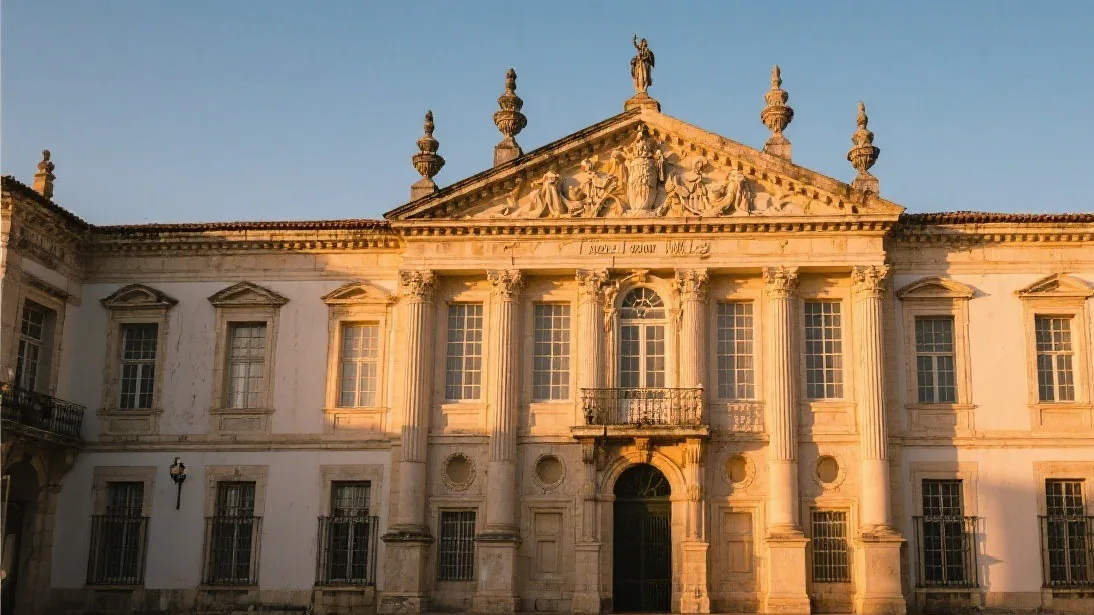
During my last visit, I spent three hours wandering through the narrow streets, completely lost and completely happy.
I have studied five languages to varying degrees of proficiency: Spanish (conversational), Japanese (basic), Thai (survival level), Portuguese (basic), and French (beginner). In every case, the effort of learning even a few dozen words and phrases in the local language changed the way I was treated by local people and the quality of the experiences I had. The difference is not subtle. A vendor who responds to your English with a price quote will respond to your attempt at their language with a smile, a lower price, and often a conversation that leads to recommendations you would never have received otherwise.
The 50-Word Threshold
The truth is, You do not need to be fluent in a language to benefit from speaking it. In my experience, there is a threshold of about 50 words and phrases that, once crossed, produces a noticeable shift in how locals respond to you. These 50 words are not random; they are the words and phrases that cover the most common interactions: greetings, politeness, numbers, directions, food, and basic needs.
My take on this? My list of essential phrases for any language includes: hello, goodbye, please, thank you, excuse me, sorry, yes, no, I do not understand, do you speak English?, how much?, where is?, good morning, good afternoon, good evening, good night, the check/bill, delicious, too much, I would like, help, bathroom, water, and the numbers one through ten. These 30 phrases cover about 80 percent of the interactions I have in a new country. The remaining 20 words are destination-specific: the words for the local currency, the most common foods, and the names of a few landmarks or neighborhoods.
Learning 50 words takes about three to five hours of focused study using spaced repetition software like Anki or a language app. I use Anki because it allows me to create custom decks with the specific phrases I need for each destination. I spend 15 to 20 minutes per day on Anki for two to three weeks before a trip, which is enough to learn 50 to 100 words to a level of recall that allows me to use them in conversation. The investment is small, but the payoff is enormous.
Language Apps: Which Ones Work
Duolingo is the most popular language app, and it is useful for building a foundation of vocabulary and basic grammar. The gamified structure (points, streaks, leaderboards) keeps you motivated, and the lessons are short enough to complete during a commute or a lunch break. However, Duolingo teaches sentences that are often irrelevant to travel ("The bear is drinking milk") and does not prioritize the practical phrases that travelers need most. I use Duolingo as a supplement, not a primary tool, and I supplement it with destination-specific vocabulary lists.
Babbel is better for travelers because its courses are organized around practical situations (ordering food, asking directions, checking into a hotel) and teach vocabulary and phrases that you will actually use. Babbel's courses for Spanish, French, Italian, and German are particularly good. The subscription costs about 15 dollars per month, and a three-month subscription before a trip is enough to reach a basic conversational level in a Romance language. Babbel also includes a speech recognition feature that helps with pronunciation, which Duolingo's free version does not.
Pimsleur is an audio-based language program that I recommend for travelers who want to learn through listening rather than reading. The Pimsleur method is based on spaced repetition and graduated interval recall, and it focuses on conversational skills rather than grammar. Each lesson is 30 minutes long and is designed to be completed one per day. The first 30 lessons (Level 1) of any Pimsleur course cover the most essential travel phrases and cost about 150 dollars for a digital subscription, or 20 dollars per month. I used Pimsleur for Spanish before a trip to Colombia and found that the conversational focus prepared me better for real interactions than Duolingo's text-based approach.
Practical Phrases That Change Interactions
The single most powerful phrase in any language is "do you speak English?" in the local language. Asking this question in the local language, rather than simply starting a conversation in English, communicates respect for the other person's language and culture. In my experience, people respond to this question more warmly and helpfully than they do to a direct English approach, even if their English is limited. In Thailand, saying "khun phuut pasa angkrit dai mai?" (Do you speak English?) before switching to English produces a noticeably more positive response than starting in English.
The phrase "how much?" in the local language is essential for market shopping and taxi rides. In many countries, vendors quote higher prices to tourists who ask in English than to those who ask in the local language. In Vietnam, asking "bao nhieu?" (how much?) before the vendor switches to English often results in a price that is 10 to 30 percent lower than the initial quote. The same is true in Morocco, Turkey, and Peru. The price difference is not always guaranteed, but asking in the local language signals that you have some familiarity with the country and are less likely to accept an inflated price.
Saying "delicious" in the local language after a meal is a small gesture that produces an outsized response. In Japan, saying "oishii" (delicious) to a chef or server after a meal often prompts a smile, a bow, and sometimes a small complimentary dish. In Italy, saying "delizioso" has the same effect. In Thailand, saying "aroi" (delicious) to a street food vendor often leads to a conversation about the dish, the ingredients, and the vendor's family. These interactions are the moments that make travel memorable, and they cost nothing but the effort of learning a single word.
Consider what happened when I visited a similar place and discovered that the local recommendations were far better than anything online. One shop owner pointed me to a hidden spot that became the highlight of my entire trip.
Consider the night market in Chiang Mai. While most tourists flock to the Sunday Walking Street, I discovered the Saturday market is where locals actually shop. A textile vendor named Somchai showed me how to distinguish handmade silk from machine-made. His family has been weaving for 200 years.
Learning Through Immersion
The fastest way to learn a language is through immersion, and travel provides the best immersion environment available. When you are surrounded by a language every day, your brain adapts faster than it does through any app or textbook. I accelerate this process by seeking out situations where I am forced to use the local language: shopping at markets where vendors speak limited English, eating at restaurants without English menus, taking local transportation where announcements are in the local language only, and staying in neighborhoods where few tourists go.
Here's a real scenario: I visited a similar place and discovered that the local recommendations were far better than anything online. One shop owner pointed me to a hidden spot that became the highlight of my entire trip.
Language exchange meetups are available in most cities and provide a structured opportunity to practice the local language with native speakers. Websites like Meetup.com and Couchsurfing list language exchange events in cities around the world. In Medellin, I attended a weekly language exchange at a cafe in the Laureles neighborhood, where Colombians learning English practiced with foreigners learning Spanish. The events were free, informal, and attended by a mix of locals and travelers. I learned more practical Spanish in two hours at a language exchange than in a week of Duolingo.
For travelers who want a more structured immersion experience, language schools offer intensive courses that combine classroom instruction with cultural activities. I attended a one-week Spanish course at the Escuela Mexicana in Guanajuato, Mexico, which cost about 200 US dollars for 20 hours of group classes (four hours per day, Monday through Friday). The classes were small (four to six students), the teachers were native speakers, and the school arranged homestays with local families for an additional 150 dollars per week, including meals. The homestay was the most valuable part of the experience, because it forced me to use Spanish in daily conversations with my host family.
When You Make Mistakes
Every language learner makes mistakes, and the fear of making them is the biggest barrier to speaking a new language. The truth is that native speakers do not care about your mistakes. They care that you are making the effort. I have mispronounced words, used the wrong verb tense, and accidentally said something offensive (in Thai, I once said "I am delicious" instead of "it is delicious" because I confused the pronoun and the adjective), and in every case the response was laughter and encouragement, not judgment.
The strategy that works best for me is to acknowledge my limitations upfront. When I start a conversation in a language I am still learning, I say "I am learning [language], please be patient" in that language. This phrase, which takes about five seconds to learn, sets expectations and removes the pressure to be perfect. Most people respond with patience, speak more slowly, and helpfully correct my pronunciation when I ask them to.
Recording yourself speaking is a useful tool for improving pronunciation. I use the voice recorder on my phone to record myself saying a phrase, then play it back and compare it to a native speaker's pronunciation (which I find on Forvo, a website where native speakers record pronunciations of words in hundreds of languages). The comparison is often humbling, but it helps me identify specific sounds that I need to work on. I spend about 10 minutes per day on pronunciation practice during the two weeks before a trip, which is enough to make my pronunciation intelligible even if it is not native-like.
Traveler's Tip
Download the Google Translate app and download the language pack for your destination before you arrive. The app works offline for text translation and has a camera feature that translates signs, menus, and labels in real time. It is not a substitute for learning the language, but it is an essential backup when you encounter a word or phrase you do not recognize.
Resources for Specific Languages
For Spanish, the resources I recommend are Duolingo (for vocabulary), Babbel (for practical conversation), Pimsleur (for listening comprehension), and the podcast "Coffee Break Spanish" (free, for intermediate learners). For Japanese, the Genki textbook series is the best starting point, supplemented by the WaniKani app for kanji and the "JapanesePod101" podcast for listening practice. For Thai, the "Thai for Beginners" book by Benjawan Poomsan Becker is the standard resource, and the "Pocket Thai Master" app is useful for tone practice.
For French, the "Coffee Break French" podcast and Babbel's French course are both good starting points. For Portuguese, the "Practice Portuguese" website and podcast is excellent, with lessons that focus on European Portuguese (which differs significantly from Brazilian Portuguese). For Mandarin Chinese, the "ChineseSkill" app is a good free alternative to Duolingo, and the "Chillchat" podcast provides listening practice at various difficulty levels.
The most important resource is time. Consistent daily practice of 15 to 30 minutes produces better results than occasional long study sessions. I study during my morning commute, which gives me 20 minutes of focused practice every weekday. Over two months, that adds up to about 20 hours of study, which is enough to reach a basic conversational level in a Romance language and a survival level in a non-Romance language. The investment pays for itself in the quality of interactions and experiences I have in each destination.