The jeep dropped me at the edge of Ushguli, and the driver pointed uphill. 'Your guesthouse is there. The tower with the red door.' I had booked nothing. A woman in Mestia, three hours down the road, had called her sister in Ushguli and arranged a room for me over a crackling phone line. The guesthouse was a stone house built in the twelfth century, attached to a defensive tower that rose five stories above the village. My host, a woman named Nino who spoke no English, showed me to a room with wool carpets on the floor and a wood stove in the corner. Dinner was khinkali, soup dumplings the size of a fist, and chacha, a grape spirit that Nino distilled herself. I paid twenty-five lari, about nine dollars, for the room and the meal.
The Defensive Towers of Svaneti
Svaneti is home to more than one hundred medieval stone towers, built between the ninth and thirteenth centuries as protection against invaders and blood feuds. Each family had its own tower, which served as a fortress in times of conflict and a storage space for valuables in times of peace. The towers are narrow, with walls two meters thick at the base, and they taper as they rise. The entrance is on the second floor, accessible only by a removable ladder. Inside, the floors are connected by wooden ladders, and the top floor has small windows for archers. Several towers are open to visitors for a small fee, and climbing to the top offers views of the Enguri Gorge and the Shkhara glacier that justify the vertigo.
Hiking in the High Caucasus
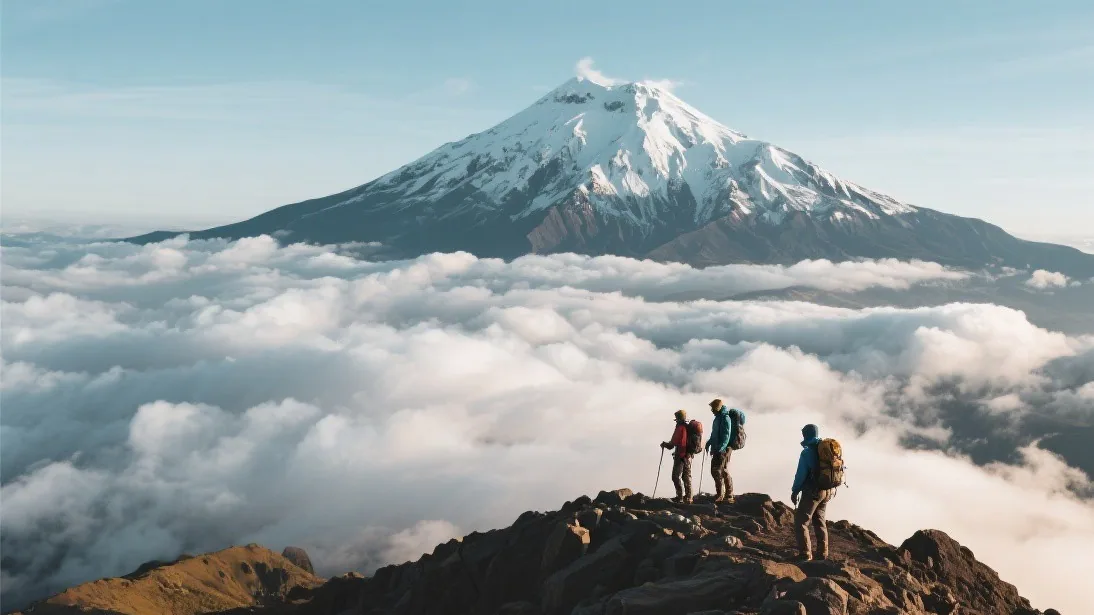
The trails around Ushguli and Mestia are among the best in the Caucasus. The most popular multi-day trek is the route from Mestia to Ushguli, four days of hiking through alpine meadows, past glacial rivers, and over passes with views of peaks over five thousand meters. The trails are marked, and guesthouses are spaced roughly a day's walk apart. I walked the route in early June, when the rhododendrons were blooming and the snow was still visible on the highest passes. Each night, I stayed in a family guesthouse, eating meals cooked from ingredients grown in the garden. The total cost for four days of hiking, including accommodation and food, was one hundred twenty lari, about forty-five dollars.
The Svan Culture
The Svan people have their own language, which predates Georgian and is unintelligible to Georgian speakers. They have their own traditions of polyphonic singing, recognized by UNESCO, and their own Orthodox Christian practices that blend ancient pagan beliefs with Christian ritual. In Ushguli, I attended a church service in a tenth-century stone church where the priest chanted in a mixture of Georgian and Svan. Afterward, the congregation shared bread and wine in the churchyard. The isolation of Svaneti has preserved these traditions in a way that is rare in modern Europe. There is no supermarket in Ushguli, no bank, and no hospital. What there is, instead, is a community that functions as it has for centuries.
Getting There and When to Visit
Svaneti is remote. The road from Zugdidi to Mestia is a five-hour drive on a mountain road that is paved but narrow. From Mestia to Ushguli, the road is unpaved and requires a four-wheel-drive vehicle. Marshrutkas, shared minibuses, run daily in summer for about fifteen lari. I hired a private jeep for the Mestia to Ushguli leg, which cost eighty lari and allowed me to stop for photographs. The best time to visit is June to September. In winter, the road to Ushguli is often closed by snow, and temperatures drop below minus twenty degrees Celsius. Even in summer, bring warm clothing for the evenings. The altitude in Ushguli is 2,100 meters, and the temperature at night can drop to five degrees Celsius even in July.