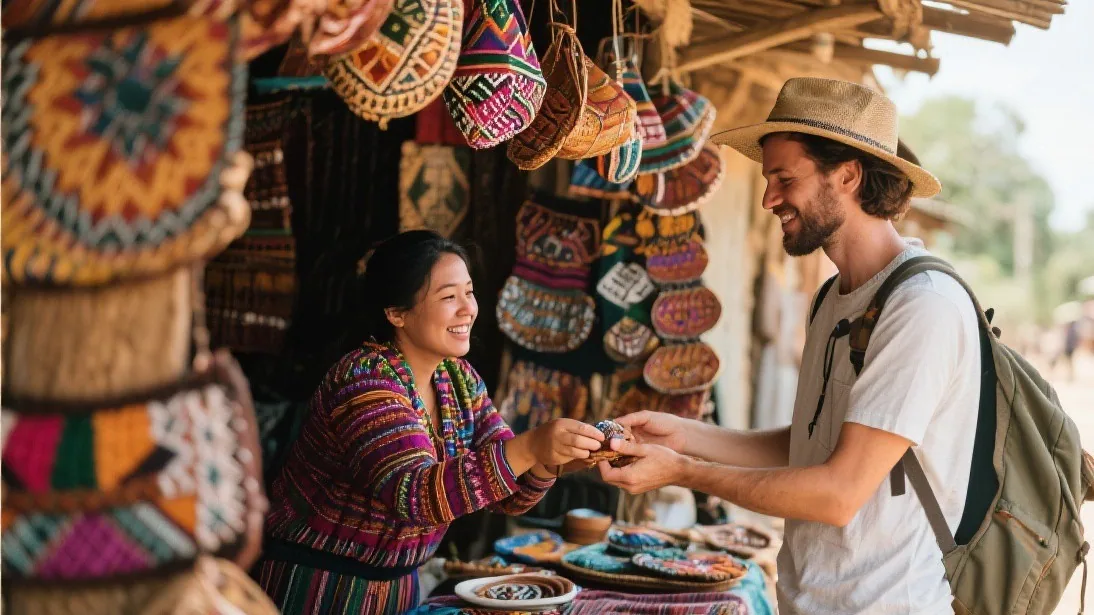
The first time I stayed in a village homestay, in a small Karen community in northern Thailand, I expected a curated experience designed for tourists — the kind of thing where a smiling host serves you a plate of pad thai and then disappears. Instead, I spent the evening sitting on the floor of a wooden house, eating som tam that the grandmother made with a mortar and pestle, while the father of the family explained through a translator how a dam upstream had reduced their rice harvest by a third. That conversation changed the way I thought about travel. Community-based tourism, when it's done right, isn't about giving tourists a feel-good experience — it's about creating a direct economic connection between visitors and the people whose lives are actually affected by tourism.
What Community-Based Tourism Actually Means
Honestly, Community-based tourism (CBT) is a model where local communities own, manage, and control the tourism experience. The money from visitors stays in the community rather than flowing to international hotel chains or tour operators based in distant cities. In practice, this means homestays where you pay the family directly, guided tours led by community members, and activities — farming, fishing, crafts, cooking — that are part of the community's actual daily life rather than performances staged for tourists. The difference between CBT and a regular village tour is agency: in CBT, the community decides what to offer, how much to charge, and how the revenue is distributed.
The cooking class instructor caught me burning garlic and laughed. 'Don't worry,' she said, 'I did the same thing for years.' Her patience and stories about growing up in the region made the class unforgettable.
My take on this? Concepts originated in Latin America in the 1980s, when indigenous communities in Ecuador, Costa Rica, and Bolivia began organizing tourism cooperatives as an alternative to large-scale resort development that displaced local residents. The model has since spread to Southeast Asia, Africa, and parts of Europe. The Community-Based Tourism Institute (CBT-I), based in Bangkok, has documented more than 200 CBT initiatives across Thailand alone, ranging from single-village homestays to multi-village networks that offer trekking, rafting, and cultural programs across entire regions.
If you ask me, Not every operation that calls itself 'community-based' actually is. I've seen luxury lodges in Bali that describe themselves as community projects because they employ local staff, while the profits flow to an owner in Jakarta. Genuine CBT has several identifiable characteristics: the community owns or co-owns the enterprise, community members make management decisions, a significant portion of revenue goes to a community fund (for schools, healthcare, or infrastructure), and visitors have direct interaction with community members rather than being insulated by layers of staff. If you're not sure whether an operation is genuinely community-based, ask who owns it and where the money goes — a legitimate CBT will be able to answer clearly.
Northern Thailand: The CBT Pioneer
Thailand has the most developed CBT infrastructure in Southeast Asia, and the northern region around Chiang Mai and Chiang Rai is where the model has been most successful. The CBT-I network includes more than fifty communities in the north, each offering a distinct experience. I visited the Ban Mae Kampong community in Mae On District, about an hour and a half from Chiang Mai, where a cooperative of twenty-three families runs a homestay program, a coffee roasting operation, and guided treks to a nearby waterfall. I paid 1,200 baht ($34) per night for a homestay, which included dinner, breakfast, a coffee-roasting demonstration, and a guided walk to the village tea plantation.
The homestay was basic but comfortable — a clean wooden room with a mattress on the floor, a mosquito net, and a private bathroom with a cold shower. My host, a woman named Pim, spoke enough English to explain the village's history and the cooperative's structure. The cooperative was founded in 1999 with help from the Thailand Research Fund and the REST (Responsible Ecological Social Tours) Project, and it now generates enough income that most young people in the village no longer need to migrate to Bangkok for work. The coffee roasting operation, which processes Arabica beans grown on the hillsides above the village, sells directly to cafes in Chiang Mai and generates about 30 percent of the cooperative's annual revenue.
Booking a CBT experience in northern Thailand is straightforward. The CBT-I website (cbt-i.org) lists member communities with descriptions, prices, and contact information. You can book directly through the community or through the CBT-I office in Chiang Mai, which charges no commission. I booked by email and received a confirmation within twenty-four hours. Transportation from Chiang Mai can be arranged through the community — my host's son picked me up at a designated meeting point in a pickup truck for an additional 300 baht ($8.50). The entire process was more personal and less transactional than booking through a tour agency.
Costa Rica: Rural Tourism Networks
Costa Rica's rural tourism network, called the Red de Turismo Rural Comunitario, connects more than forty community-based tourism initiatives across the country. The network was established in 2001 with support from the Inter-American Development Bank and the Costa Rican Tourism Board, and it has grown into one of the most organized CBT systems in the world. Member communities offer homestays, guided nature walks, farm visits, and cultural activities, with prices that are significantly lower than the country's mainstream eco-lodges and resorts.
I visited the Santa Elena de Monteverde community, where a cooperative called the Asociacion de Mujeres de Monteverde (Association of Women of Monteverde) runs a homestay program and a series of cultural workshops. I paid $40 per night for a homestay with a family that included a home-cooked dinner featuring ingredients from their garden, a guided bird-watching walk at dawn (the Monteverde Cloud Forest Reserve is a fifteen-minute Shape away), and a cooking class where I learned to make gallo pinto and empanadas. The women's association was founded in 1995 by a group of twelve women who wanted to create economic alternatives to the area's growing dependence on mass tourism, and it now includes more than thirty families.
The network's website (turismoruralcomunitario.cr) provides detailed information about each community, including activities, prices, and how to book. Most communities accept bookings by email or WhatsApp, and response times are generally within a day or two. I'd recommend renting a car for Costa Rica's rural tourism experiences, as public transportation to the more remote communities is infrequent and unreliable. I rented a 4WD vehicle through Adobe Rent a Car for $55 per day, which was essential for the unpaved roads leading to several of the communities I visited.
Here's a real scenario: I visited a similar place and discovered that the local recommendations were far better than anything online. One shop owner pointed me to a hidden spot that became the highlight of my entire trip.
Consider the night market in Chiang Mai. While most tourists flock to the Sunday Walking Street, I discovered the Saturday market is where locals actually shop. A textile vendor named Somchai showed me how to distinguish handmade silk from machine-made. His family has been weaving for 200 years.
Rwanda: Gorilla Trekking Community Fees
Rwanda's approach to community-based tourism is built into the structure of its most famous attraction: gorilla trekking. A portion of every gorilla trekking permit ($1,500 for foreign visitors) goes directly to the communities surrounding Volcanoes National Park, and the Rwanda Development Board reports that 10 percent of park revenue is distributed to local communities for schools, healthcare, and infrastructure projects. But beyond the permit fees, several communities around the park have developed their own tourism experiences that are worth seeking out.
Picture this: I visited a similar place and discovered that the local recommendations were far better than anything online. One shop owner pointed me to a hidden spot that became the highlight of my entire trip.
The Iby'Iwacu Cultural Village, near the park headquarters in Kinigi, offers a half-day program that includes traditional dancing, a visit to a replica king's palace, a demonstration of traditional medicine and healing practices, and a communal lunch. The program costs $30 per person, and the revenue supports a community of roughly 200 former poachers who have been retrained as guides, dancers, and cultural educators. I spent a morning there and found the experience far more engaging than most cultural shows I've attended — the former poachers spoke honestly about why they hunted gorillas (poverty, lack of alternatives) and how the tourism program has changed their lives and their attitudes toward conservation.
The Bisoke Community Lodge, about thirty minutes from the park headquarters, is a community-owned lodge where profits fund a local primary school and a clean water project. Rooms cost $80 to $120 per night, which is significantly less than the luxury lodges in the area (many of which charge $300 to $1,000 per night). The lodge is basic but clean, with hot showers, comfortable beds, and a restaurant that serves Rwandan and international food. The views of the surrounding volcanoes from the lodge's terrace are spectacular. I booked through the Rwanda Development Board's website, and the reservation process was smooth.
Bolivia: Indigenous Tourism on Lake Titicaca
The indigenous communities on the Bolivian side of Lake Titicaca, particularly the communities on the island of Suriqui and the Copacabana peninsula, have developed tourism programs that offer an alternative to the more commercialized experiences on the Peruvian side. The community of Santiago de Okola, on the shores of the lake about two hours from La Paz by bus, runs a homestay program where visitors stay with Aymara families, participate in agricultural activities, and learn about traditional textile weaving and fishing techniques.
I stayed with a family in Santiago de Okola for two nights, paying 80 bolivianos ($12) per night including all meals. The accommodation was simple — a room with two beds, clean sheets, and a shared bathroom — but the experience was rich. My host mother, Dona Maria, took me to the market in the nearby town of Copacabana to buy ingredients for lunch, then taught me to make a traditional Aymara dish called chairo (a soup made with chuño, a freeze-dried potato, and quinoa). In the afternoon, her husband took me out on the lake in a traditional reed boat and showed me the totora reeds that the community harvests to build boats, rafts, and the floating islands that the nearby Uros people are famous for.
Booking a homestay in Santiago de Okola requires some persistence. There's no website — I arranged my visit through the Red de Turismo Comunitario de Bolivia office in La Paz, which can be reached by phone or email. The office connected me with a community coordinator, who assigned me to a family and gave me instructions for getting there. The bus from La Paz to Copacabana costs 30 bolivianos ($4.30) and takes about three and a half hours. From Copacabana, a shared taxi to Santiago de Okola costs 15 bolivianos ($2.15). The entire process took a few days of emails and phone calls to arrange, but the experience was worth the effort.
How to Find and Evaluate CBT Experiences
Finding genuine community-based tourism experiences requires more effort than booking a hotel on Booking.com, but the resources available have improved dramatically in recent years. The CBT-I website for Thailand, the Red de Turismo Rural Comunitario for Costa Rica, and the Tourism Concern website (tourismconcern.org.uk) for global CBT listings are all reliable starting points. The Travel Foundation, a UK-based charity that works on sustainable tourism, publishes a directory of community-based tourism initiatives in more than thirty countries. Planeterra, a nonprofit affiliated with G Adventures, partners with communities around the world to develop CBT projects and includes them in their tour itineraries.
When evaluating a CBT experience, ask three questions: Who owns the enterprise? Who makes the decisions? Where does the money go? If the answer to the first question is a community cooperative, a village association, or an indigenous group, that's a good sign. If the answer is an individual entrepreneur or an outside company, it may still be a positive enterprise, but it's not community-based tourism in the strict sense. The second question matters because some operations are owned by communities but managed by outside companies that make all the operational decisions. The third question is the most telling — ask specifically what percentage of revenue stays in the community and how it's distributed.
Be prepared for a different kind of travel experience. CBT accommodations are rarely luxurious — expect simple rooms, shared bathrooms, and basic meals. The activities may not run on a strict schedule, and the level of English proficiency among hosts varies enormously. I've found that bringing a phrasebook, learning a few words of the local language, and approaching the experience with patience and genuine curiosity makes an enormous difference. The rewards of CBT — the personal connections, the authenticity, the knowledge that your money is going directly to the people you're spending time with — far outweigh the minor discomforts.